
Performing Baseball
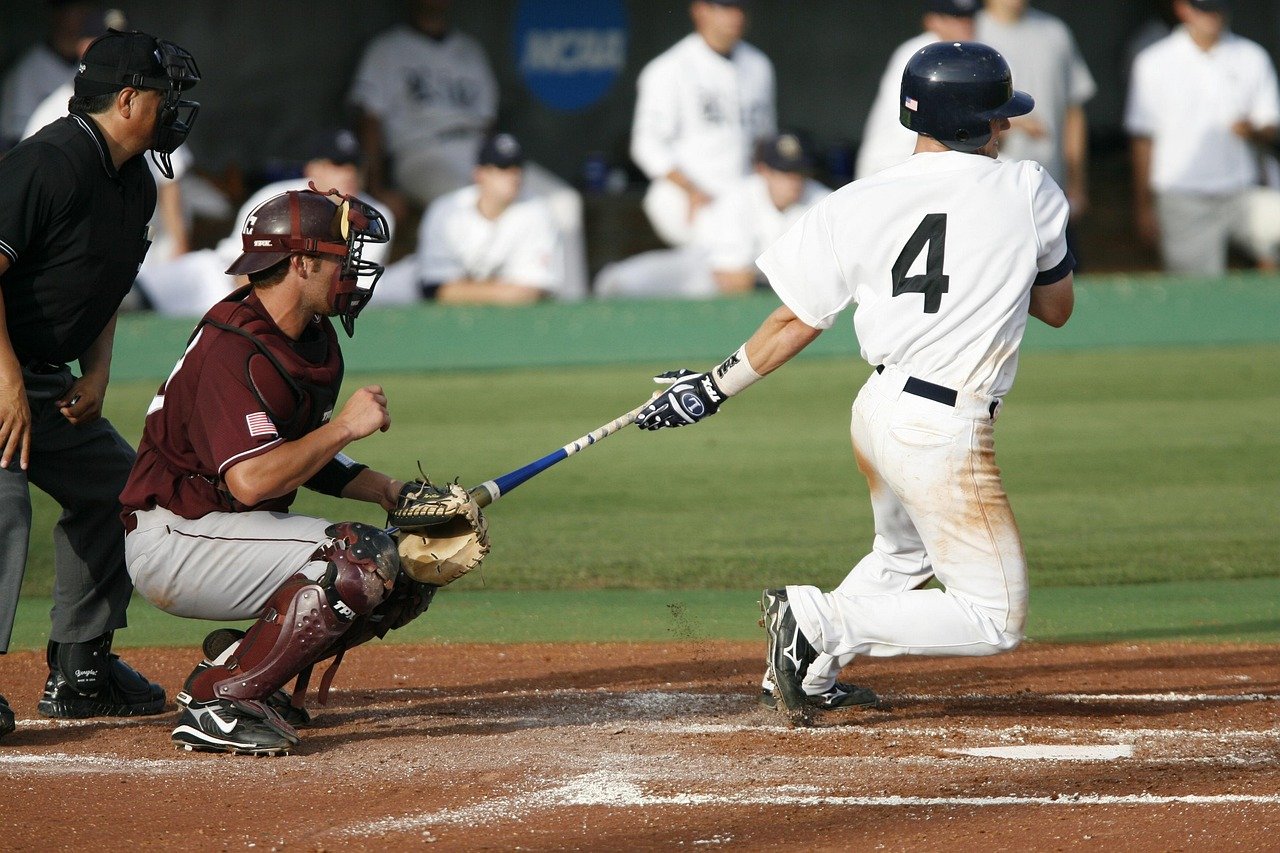
Image by Keith Johnston from Pixabay
Disclosure: This article contains affiliate links, meaning The Fan Files will receive a small commission if you choose to purchase through any of the below links.
Dr. Travis Stern is an author and associate professor of theater arts at Bradley University, where he teaches theater arts and performance studies. Last year, we had a nice chat about his book Ballplayers on Stage and the history of ballplayers taking to the vaudeville stage for IMPULSE Magazine, and I thought it would be a great time to hear what he thought about baseball and performance right now.
In this conversation, we chat bat flips, heroes and villains, and Bryce Harper (in multiple contexts).
First things first, define performance studies.
Performance studies is just about looking at all the different ways that we read the world – but we're not always aware of how we're reading the world. It's everything from non-verbal communication to actual verbal communication, but also how it's being said. It's all those roles that we play during our everyday lives. Performance studies encompasses all of that.
When you move into entertainment, whether it's theater or film or sports, we start looking at the specific codes that those performers are using to try to convey something to someone else, whether it's a teammate, whether it's an opponent, whether it's an owner or ownership group, or the fans themselves. There are always things that are being enacted. Sometimes they're conscious of it, and sometimes they're not, I think.
We talked last time about your book Ballplayers on Stage: Baseball, Melodrama, and Theatrical Celebrity in the Deadball Era. If you had one takeaway from your book, what would it be for the general baseball fan?
I think it's that we are still very invested in heroes, villains, fools, and clowns as part of our narrative storytelling. I don't think you can watch a baseball game or listen to a baseball game on the radio or SiriusXM or anything and not have the standard script of "here's our hero," either for this game or this season, for this team. Here's our villain today. Even it's pitch by pitch. I think that's the thing that is so baked into baseball from when it was originally constructed as an entertainment in the 19th century.
I think we lose that today. The Hall of Fame announcement's coming up soon. They're always, "You've got to have a certain level of WAR. You've got to hit this certain number," 3,000 hits or 300 wins. It's the Hall of Fame. A certain amount of that is the fame of it. That comes with storytelling. That comes with the idea of who's playing what role in a local narrative, in a regional narrative, or in a larger national narrative as well.
The Ichiro thing, not being unanimously voted in. It felt like there was a performative aspect of that.
I don't know. We remember the pitcher from Detroit, Galarraga, because he was one out away from a perfect game, right? Part of what's going to happen is Mariano Rivera gets his perfect 100% Hall of Fame, and Ichiro being one vote away, or however close it was. That almost makes it more worthy of debate, more worthy of fame. Also, Ichiro's just a blast to pay attention to.
We brushed on this last time talking about ballplayers on the stage doing vaudeville as brand building. Now, ballplayers have social media. Bryce Harper is swapping out his blood and drinking raw milk. Ozzie Albies has fish in his garage. How do these off-the-field brands change how we think about these players?
There are theatrical performers that go all the way back centuries that have had these eccentric stories tied with them. The famous French actress, Sarah Bernhardt, slept in a coffin and would only be paid in gold. She would never be paid in anything else. It almost becomes its own aura to them. Seeing Bryce Harper, Ozzie Albies, and some of these players leaning into, "I'm unique, I'm different, you're going to remember me one way or another," I think that's part of what's happening here.
I'm not saying any of this is performative, that they're playing somebody that they're not. Certainly, we know in the contemporary media landscape, one thing said differently, or one thing mentioned gets blown up into a headline and then becomes a reaction video on TikTok. Then there's a stitch to that TikTok by somebody reacting to that and reacting to that, so that any eccentricity becomes larger than the reality it probably started with.
Speaking of Bryce Harper again (he's a very good person to talk about for this stuff), Dave Dombrowski called him “not elite” and then Harper wore a shirt during some batting practice that said “not elite.” I guess there's a way people could have sniped back, back in the day, but it would have been a quote in the paper, right?
It would have been a quote in the paper, but Babe Ruth did this in his first vaudeville tour, that he was having a dispute with ownership. He had actually been suspended for a little bit of the season by the Yankees' owner. In his vaudeville tour, he alluded to that specifically without saying the owner's name. Everybody knew what the joke was. It was always this kind of nudge.
It's interesting when this happens between players and ownership because it's really replaying this classic tension of labor forces in general. I think the interesting part here is seeing how much more this is going to happen over the next year with the potential lockout/strike, I'm not sure which way it's going to go, looming over 2027.
I don't mean to only talk about Bryce Harper, but speaking of potential lockouts or strikes, Bryce Harper also almost started a fight with Rob Manfred. He's full of stories, that Bryce Harper.
That's great. We should be hearing some of these stories. Everybody is so concerned about not saying the wrong thing, "I'm going to play the script. I'm going to say the right thing. I'm going to praise the team, praise my teammates, honor the opponents." When you see someone go off script, like Bryce Harper did and talking about Rob Manfred and some of those folks coming into the clubhouse, we want to hear that because whether it's true or not, it rings more authentic to us as outsiders.
Speaking of the inauthentic, what sparked this whole conversation for me was reading Ball Four. Bouton mentions the scripts that he uses with the press, and they're exactly the same scripts that people use today. I was wondering if you think players are just trained into it, because they see the last generation of players saying that on television or on the radio.
I really think it's one of those things that you learn in the clubhouse, you learn at dinner with your older teammates. It's one of those things you pick up on the bus rides, on the plane rides, that this is what you say, "Never tell them, never show them this, never show them your real emotion, always keep it behind the clubhouse doors."
These are the same ones they've been saying since the 1960s, since mass media really exploded, because they're benign. You have to have a quote for the paper because you've got to meet a writer who has 162 games to cover and 162 stories to file, and they need something. You don't want to be terrible to these guys normally, but you're going to say what you're going to say.
It's always refreshing when you get a Joey Votto, when you get a Lance Lynn, when you get a Joe Kelly, when you get a Bryce Harper, someone who's going to let that facade slide a little bit and give us something. Now we know there's always something to be paid for that. If they're a younger player, they're going to get a slap on the wrist by the veterans there. If it's a star player, the media is going to hound them a little bit until there's some restitution made. It's interesting how this always plays out.
What are your opinions on the bat flip? Why do you think it's so controversial?
For me, it goes right to that hero-villain thing. Everybody loves a bat flip when it's their team. Everybody hates a bat flip when your guy just threw the pitch. That being said, there are always people who adhere to the play-the-game-the-right-way script, "There should never be bat flips. Always put your head down and run as fast as you can around the bases." That's just not baseball anymore.
I think one of the things we're seeing is a push toward seeing the humanity of some of these players. The bat flip is one of those places. I feel the same way for pitchers who are exuberant about a strikeout, getting that second out, getting that hitter that has always gotten you. I think there are places for that kind of emotion in the game. As I'm sitting here, I'm wearing a Savannah Bananas hat and thinking about how much they're leaning into baseball as entertainment, filling stadiums, selling out all across the country, and people not getting into the lottery so they can see these players.
Baseball doesn't have a problem, I don't think. I think Major League Baseball has some issues.
I did write about a very performance theory piece about Savannah Bananas and about how I think their audience is the internet and not the in-person experience. I found the in-person experience very disappointing.
I haven't been to a game. I saw one player saying, "I got drafted. I went and told my coach. He said, 'Well, you can go take the money, but why don't you stick around for another year?' He convinced me to stay. Then the next year was 2020. I graduated. They did five rounds of the draft." It wasn't until then that I realized, "Oh, the Savannah Bananas couldn't have emerged at any other time except post-2020, when you have a giant pool of incredibly talented players with nowhere to ply their trade."
I totally believe that. Online culture changed a lot, too. People turn to their phones for a lot more entertainment than they used to. The thing about the Bananas is that they don't dance at the audience. They dance towards the camera. That's a big thing for me. When I was there, I was like, "This is nuts." It's so bizarre.
It is toward the audience in the stadium, but it's toward the Jumbotron. They're not dancing to the surround. They're dancing to the ideal spectator, which is something that goes all the way back to Elizabethan England. If we really want to go down this thing, baseball is all about perspective, we've got the disappearing lines that meet at home plate. The home plate umpire is the ideal spectator. When you only have the one umpire, that's where they stand.
Back to Major League Baseball, though, and bat flips and that entertainment value, I think we're in an interesting spot with the collapse of the regional networks. The collapse of the regional networks, and I would also say the secondary position that baseball has taken with ESPN. Now that ESPN is really joined with NFL, even in the NFL offseason, very often they are the first story on SportsCenter. Baseball, even when Ohtani's pitching or Harper has done something amazing, or you've got all these things, they're the second or third story. MLB's got some trouble with that, I think. Once they get their media stuff figured out, once they can get this stuff going in, it'll be interesting to see.
The Cardinals just opted out of FanDuel. They just canceled their contract like everybody else. We've been told you're going to be able to see every game, but I don't know what that looks like.
We’ve talked about heroes and villains a lot, so far, just on the basic level, it feels like the heroes and villains are the same heroes and villains that there were always. People don't like the cocky guy, the whatever. Do you feel like the archetypes will change as the game develops, or will they stay the same?
I think the archetypes will stay the same, but I think our definitions shift. A lot of people do see Harper as a hero, but those traits would not have been seen as heroic in the 1980s or certainly in the '60s. As we start seeing players move into bouncing from team to team during a year, it's hard to get heavily invested in them as a hero. I think as players do more and more podcasts, there's more of a chance to see the player as a hero, even when they're batting against your team or they're pitching against your team.
The Mookie Betts podcast, for instance. He's a great guy. Everybody enjoys him. It's hard to root against him now. It's hard to root against some of these players. As you see them standing up for things that they believe in-- I think it fuzzies the boundaries a little bit more. As far as heroes, villains, and fools, clowns, I think those archetypes are pretty standard.


Showcase your love of The Fan Files with this 2×1.5 inch vinyl glow in the dark sticker.