A Unique Take on the Roberto Clemente Story
Wilfred Santiago/Fantagraphics
Disclosure: This article contains affiliate links, meaning The Fan Files will receive a small commission if you choose to purchase through any of the below links.
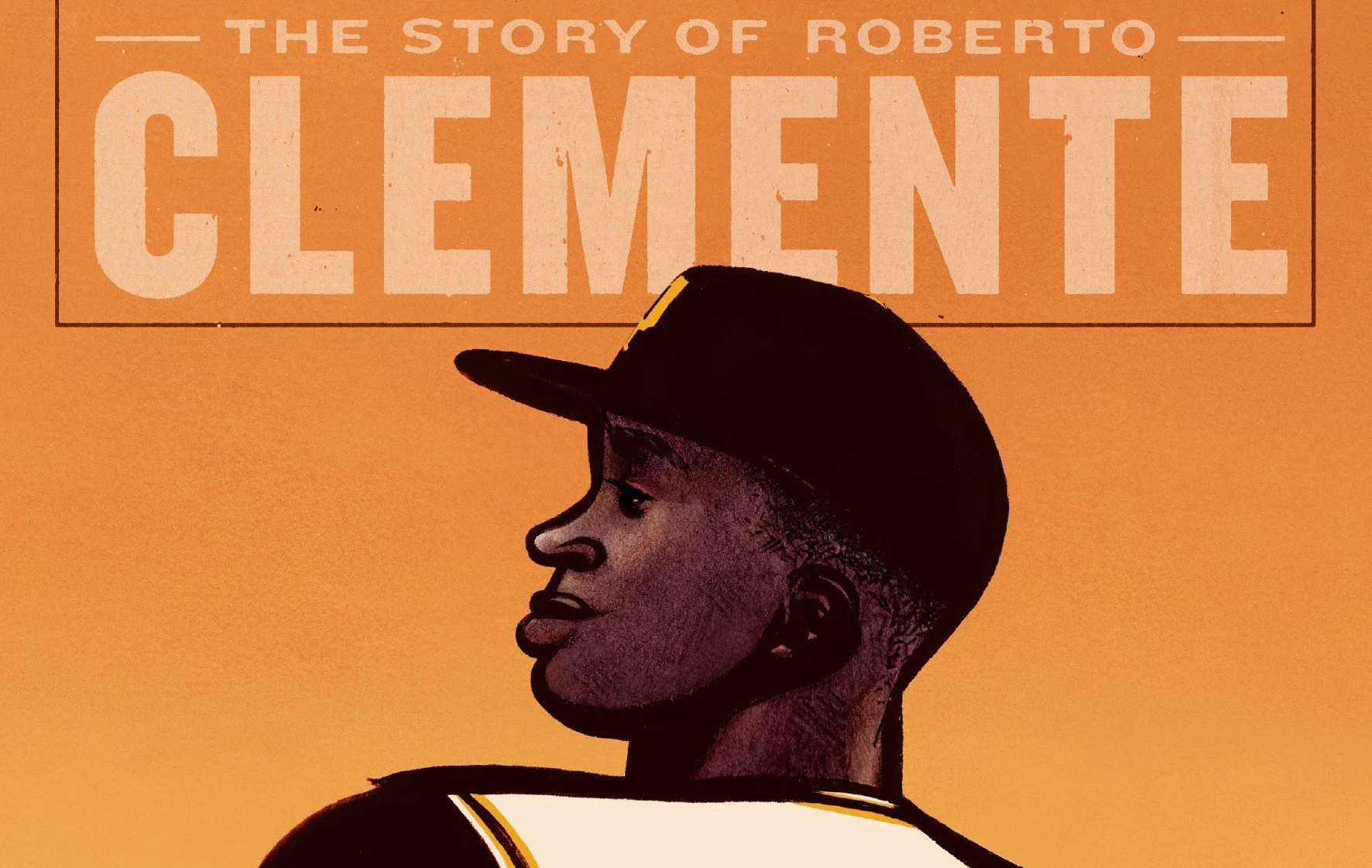
If you’re looking for a detail-heavy, play-by-play biography of Roberto Clemente, Wilfred Santiago’s “21”: The Story of Roberto Clemente is not for you. If you’re looking instead for a graphic history that tries to capture the essence of the iconic ballplayer and man – you should pick up a copy today.
Instead of attempting to tell Roberto Clemente’s life story from birth to death, Santiago draws sketches of scenes, building a sense of the man’s life and the moments that shaped his approach to life. We see his ascension through MLB and into the realm of baseball superstars, but we also see his youthful love for the game and how the death of his sister haunted him. The book is not focused on his baseball achievements but on his journey. Instead of home run after home run, we see moments featuring his fear of flying and dying young. We see the patterns that arise in his life. We see how his life was as a Black immigrant to the States, and how different it was from living in Puerto Rico.
Wilfred Santiago/Fantagraphics
In between the scenes of Clemente’s life, we also get pages of text, featuring myths, or excerpts from political documents that draw out the complicated history between the United States and Puerto Rico, as well as the history of Puerto Rico itself. The conversation about Puerto Rico’s relationship to the US is present in this graphic novel, just as it would have been present not only in Clemente’s life but also in how American and Puerto Ricans saw him.
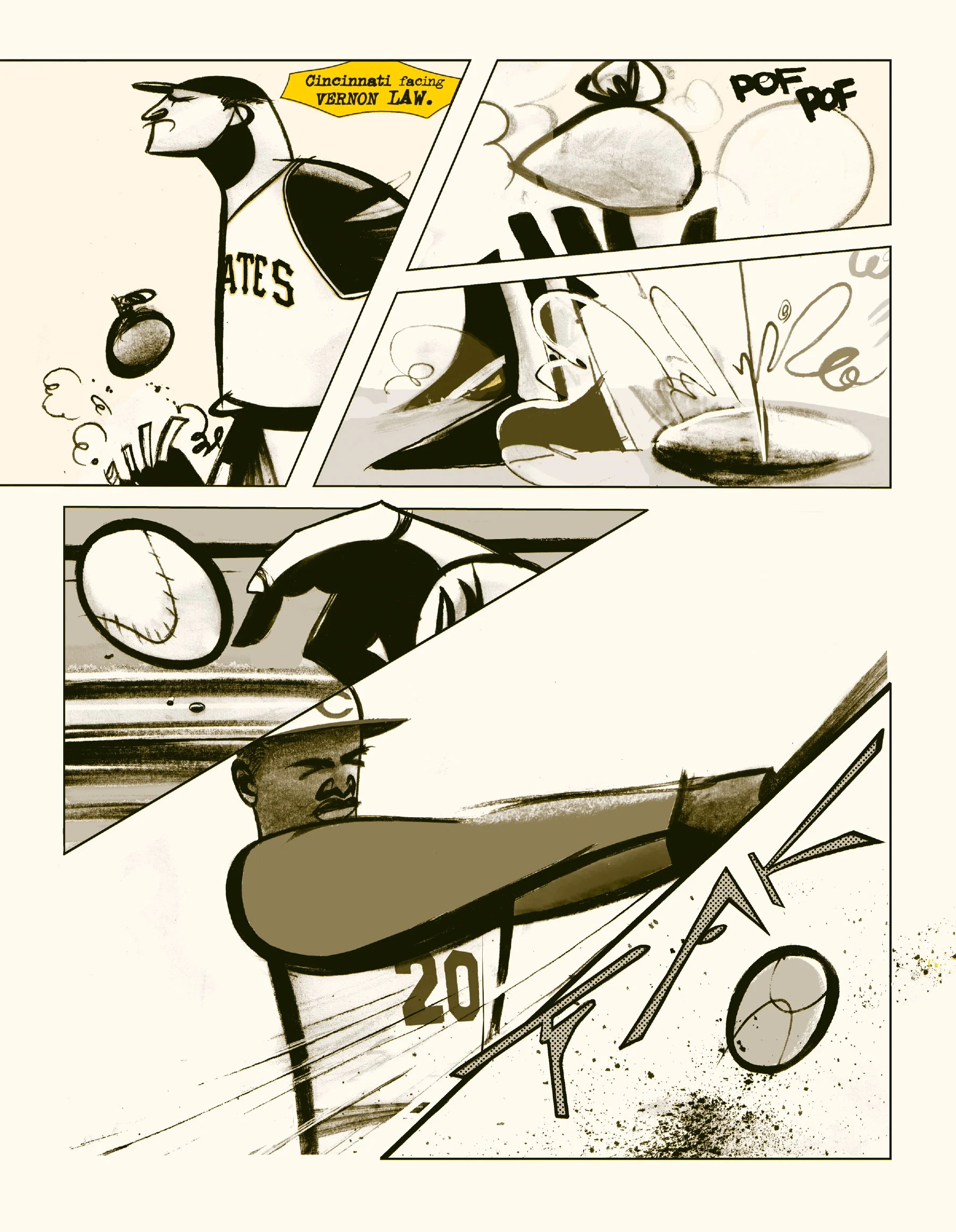
With a bombastic stylized aesthetic focused on detail and environment, Santiago brings us into the moment, into Clemente’s childhood and adulthood, so that it seems not like history or someone else’s story, but like the present and our own. All of the art is beautiful and filled with life, but the baseball scenes stand out. Panels of heightened expressiveness capture the energy of live baseball on the page, not only as a beautiful game but as an artform that Clemente grew to master.
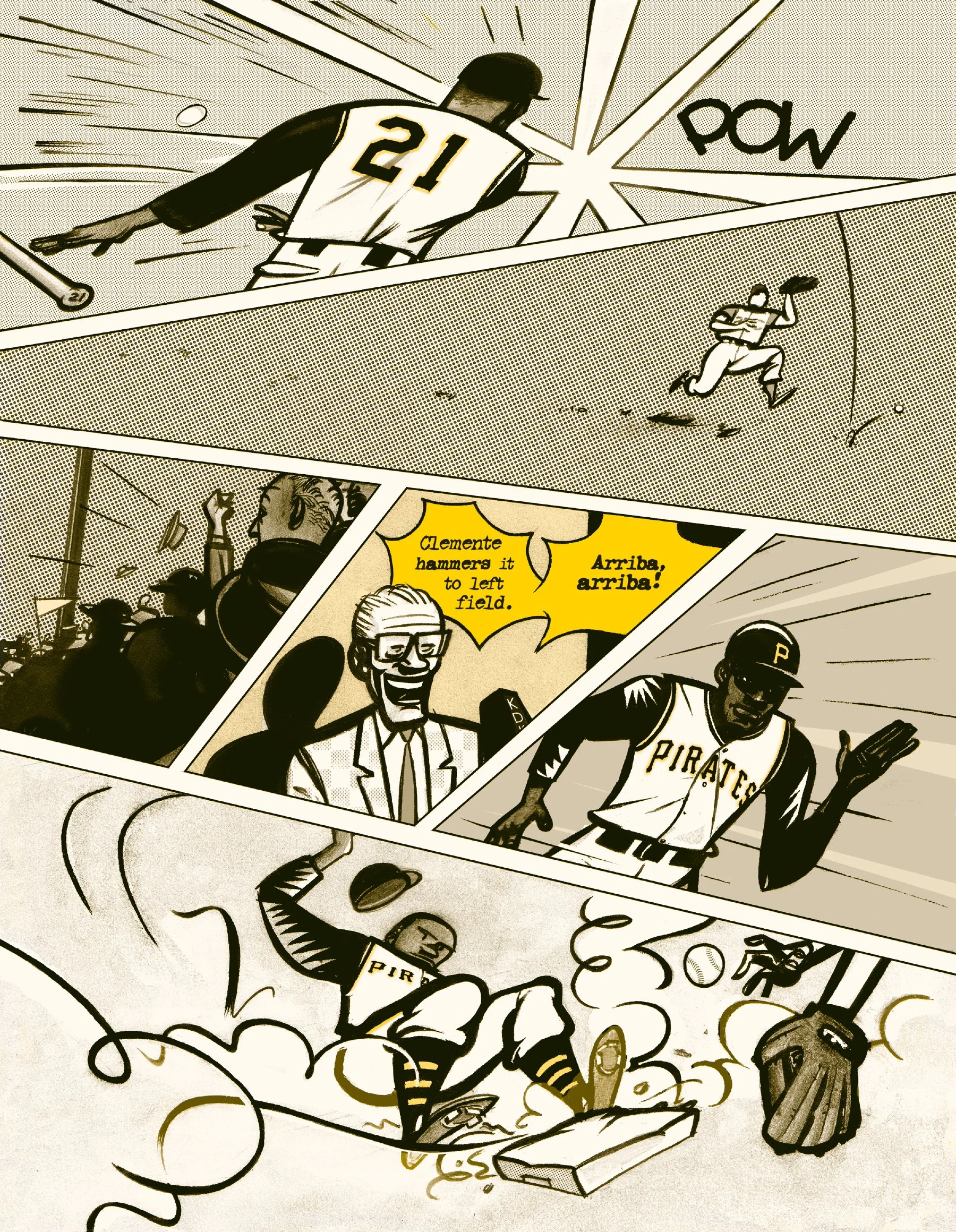
Wilfred Santiago/Fantagraphics
Santiago frames Clemente’s tale with the personal – recounting Santiago’s own childhood adventure of trekking to Three Rivers Stadium to see Clemente’s 3000th hit. His conclusion also reaches for the personal, speaking on Clemente as a person, as representative of greatness and selflessness. That simple bookending allows for a riskier middle, a middle that doesn’t try to necessarily tell the story of Clemente’s life, but to represent some of it, so we can see the past the hero and legend, and into his life.