Rickwood Field, America’s Oldest Ballpark
Disclosure: This article contains affiliate links, meaning The Fan Files will receive a small commission if you choose to purchase through any of the below links.
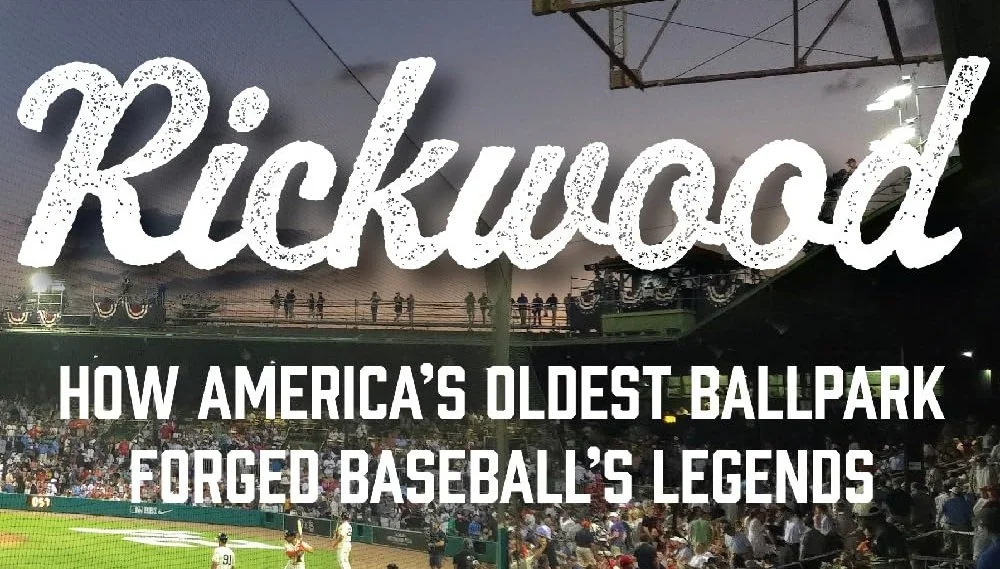
Tim Whitt and Joe Mock’s Rickwood: How America’s Oldest Ballpark Forged Baseball’s Legends follows the story of Rickwood Field from its origins in 1910 to 2024’s special MLB game, showcasing information about the construction of the park, the legends who played there, and what the park means to the city of Birmingham and baseball history.
In the following conversation, Whitt and Mock speak to their relationship with baseball, the unique appeal of Rickwood Field, and what they hope to see with future collaborations between MLB and Rickwood Field.
All right. First things first, tell me about how this expanded project got started.
Joe Mock: Well, Tim wrote the original book back in the '90s called Bases Loaded with History, which was the definitive history of Rickwood Field in Birmingham. Rickwood Field was built in 1910 and bills itself as America's Oldest Ballpark. I bought that book years ago, fell in love with it when I had the opportunity to cover the Major League Baseball event at Rickwood Field in 2024. In doing my preview articles, I quoted liberally from that book that Tim wrote.
When I came to Alabama, he and I got together and hatched a plan to update everything 30-plus years into the future, because if you think about it, when he wrote that original book in the early '90s, there was no internet, there was no World Wide Web, there was no Google. He did all the heavy lifting of going to the basement of the Birmingham Public Library and spending day after day there in the archives doing research.
Tim Whitt: As he said, there was no internet, no Google, and the original research essentially was going through microfilm on newspaper articles, box scores, just following the trail day to day, year to year, especially in the early stages, which was about the actual building of the park, really up to the days that the Barons left, then you got more recent newspaper articles and it was more current events. It was an incredibly arduous task to reconstruct all that stuff from 1910, especially up to about 1960. That was all done pre-internet.
Joe: We decided to do an updating of his original book because we have access to a lot more information now in the internet age, especially about the Negro Leagues. Not only update everything from that original book that was written over 30 years ago, but also then update what has happened in the last three decades at Rickwood Field, which has been a lot, culminating in the major league game that they played in 2024 as a tribute to the Negro Leagues. They brought all the living Negro League players, about 60 of them, for that event.
That's all in the book, everything from the turn of the last century, all the way up to the present.
What did your collaboration look like?
Tim: We had to do it fairly quickly because we did want to get this thing done before Opening Day. There was a good deal of structure of the book in the storytelling structure. The focus was really from the first book, which was, I think, in good form, it just stopped off in 1987.
Joe had done a lot of coverage of the Major League situation. He knows more about the Major Leagues, what they're doing in Rickwood now, and the organization getting the Major League game in 2024 that was played therein, that's what's been added, for the most part, is things since 1990, 1995. That's the real expansion of the book. The earlier stuff is very similar in tone and in execution to the original book.
Speaking of the Rickwood Field game that MLB did in 2024, you write about it in the book, but what would you want to see out of future collaborations between MLB and Rickwood?
Joe: If they want to adequately honor the Negro Leagues, I think there should be a major league regular season game at Rickwood Field every season. It should just become part of the schedule- and invite all of the living Negro League players. Instead, they did that one-and-done event in 2024. They do play an old-timers game called the East-West Classic, which is the name that the All-Star game was called during the heyday of the Negro Leagues. They're bringing together some retired Black players. They have not announced it for this year, but we understand it's going to be in June sometime.
That's nice, but I really think that because of all of the history of Rickwood Field, particularly about the Negro Leagues, they really need to schedule more, especially now that the ballpark is fixed up and can adequately host a Major League game without worrying about the players getting injured on a sub-standard playing surface and all that. Millions of dollars have been invested in the stadium to be able to host more major league events. I keep begging them. I heard a rumor that they're thinking about bringing another game there in 2027, but they've not announced that for sure.
Of course, there may not be a 2027 season if there's no collective bargaining agreement. I think they're holding their cards close to the chest about what they're going to do as far as special events go in 2027. I think what they have done in honoring the Negro Leagues so far is nice, but I don't think it's sufficient. It should be something that is celebrated every season. MLB is now this season playing a third game at the Field of Dreams movie site in Iowa. The first two were a big hit, and I don't begrudge them doing that, but I want them to do that with Rickwood Field.
Tim: One thing, too, the Field of Dreams, that's where a fictional cinematic Shoeless Joe Jackson played on the field there. Shoeless Joe Jackson, the actual flesh and blood Shoeless Joe Jackson, played numerous times at Rickwood Field. Rickwood is unique in that Shoeless Joe Jackson played there, but Josh Gibson of the Negro Leagues also played there.
Players from both leagues would play there. Wrigley Field or Fenway since they were league parks, you could go your entire lifetime and never see a player from the other league play there. They played at Rickwood Field every year because they came north and played the exhibition games. Joe DiMaggio and Ted Williams would play there, but also Christy Mathewson and Grover Cleveland Alexander would play there because they would play interleague games there.
The historical significance of Rickwood is real, while the significance of the Field of Dreams is fictional and emotional. I really think it would do baseball a lot more good to celebrate real history instead of cinematic history. Of course, that's my two cents on it. Obviously, they've found that a lot of people enjoyed the Iowa game. I enjoyed it myself. Rickwood, I think, would be much better suited to an annual game than Iowa is.
Joe: And we'd sell more books.
If you wanted baseball fans to know one thing about Rickwood, what would it be?
Tim: One thing about Rickwood Field? I think it's the most historically significant sports stadium in the Western hemisphere. It's more significant than Wrigley Field, Fenway Park, Dodger Stadium, any of the great Latin American football stadiums.
Rickwood Field is important not just for sports history, the great players, the Babe Ruths, the Henry Aarons that played there, it's significant socially because it was part of segregation and racism in America, and now it is part of the integration of baseball. Jackie Robinson played there very early at Rickwood Field with integrated Dodgers teams. The games themselves, Bull Connor becomes a figure in the story of Rickwood Field, the same way that Bull Connor is a figure in American history. There's just no sports stadium where history and social justice and America collide like they do at Rickwood Field.
Joe: I would add that your average baseball fan probably doesn't look at it in these terms, but Rickwood Field is older by four years than Wrigley Field. It's older than Fenway by two years. Tim mentioned all of the great players that have played there. For the majority of the decades that Major League Baseball has existed, there was no inter-league play. There'd be all-star games. There would be World Series where American League played nationally, but you didn't have inter-league play.
Rickwood Field, I think, rightfully claims that more baseball Hall of Famers have been on its field than in any other ballpark, including Yankee Stadium, Fenway, Wrigley, any of those historic parks because a lot of those have been rebuilt. The Yankee Stadium of today is only, what, 17 years old. The one before that was rebuilt also back in the '70s. The Rickwood Field that you see today resembles very closely the Rickwood Field that opened in 1910. When you consider probably somewhere around 200 baseball Hall of Famers have been on that field at some point over the years playing or managing or whatever, I think its historical significance is unmatched.
That's why I was so anxious to get to work on this book with Tim, so that we can bring that history to light and also bring it up to date. This is a very historically significant ballpark that I think every Major League or any kind of baseball fan should really want to know more about.
I have one last question for you guys, which is, what's your personal relationship with baseball?
Tim: Joe's obvious. He works in baseball every day. I played baseball growing up. I played football and basketball. I was in graduate school in Birmingham. My brother was living over there. He was an engineer with the Alabama Power Company. I was going to graduate school and I was rooming with him because I could save money that way. In graduate school, as you know, you don't have any money. It became a thing that they did for fun. They said, "Well, let's go over to Rickwood Field and see the Barons play." I thought, "My gosh, who would want to go see a minor league baseball team?"
I went over there to the park the first time and was just amazed. This was when Art Clarkson had brought the team back after they had been defunct for about five years. He was a really good minor league owner and promoter. The park itself was amazing. It was like stepping back into time even then when you went into that park. It was a very old structure. It looked very old. It's been refurbished now, as Joe can tell you. It looks a lot better now than it did then, but it was just different.
You got the feeling that Babe Ruth might step up to the plate while you were in there. It had that ballpark feel that very few stadiums at all have. They try to reconstruct it. The modern parks, a lot of times, try to build in what Rickwood just has and what Wrigley and Fenway just have because of the time and experience. That got me hooked. I got interested in the stadium. At that time, I was wanting to become a history professor. I was looking for something that was a good subject for history. I think there's nothing better than this.
It happened to coincide perfectly with the Friends of Rickwood forming, which was very fortuitous for everybody because every old Southern Association ballpark with the exception of Rickwood Field is gone. There were several legendary ballparks. There was Ponce de Leon Park in Atlanta, which had a tree in center field. The tree is still there. The ballpark is gone. Russwood Park in Memphis, where the Chicks played, is gone. Hartwell Field in Mobile. All of these places are gone.
I wanted to tell the story as much as I could. It's baseball. It's history. There's some engaging personalities in this thing. First and foremost, there's Rick Woodward that built the park, who is a real American original. That's somebody you would not know about before you read the book. If people just know Rick Woodward, I think we've accomplished something with this book.
Joe: As for me, there's never been a time when I was not just a total baseball addict. When the internet started in 1997, I bought the domain name baseballparks.com. I still operate that today. That's how USA Today found me and asked me to start freelancing for them. I've now done about 130 articles that they've published in various USA Today publications over the years. There's nothing I like better than writing about and reading about baseball, and especially baseball history and baseball parks. If you're going to operate a website that's called “baseball parks,” you should pretty well be immersed in it.
I'm sure there are other people that can make this claim, but at this point, I've seen games at all 30 Major League parks, all 23 spring training complexes, and all 119 affiliated Minor League parks. I've gone to all of them, written about them, for USA Today, but especially for my baseballparks.com website. I got a journalism degree from West Virginia University a really long time ago. Even though I had a 38-year career doing insurance, I was always freelancing and doing baseballparks.com on the side. I retired from that last June so that I could concentrate on doing exactly this, this book, more writing for USA Today and other publications, more things from my baseballparks.com website.
I've got more books that I'm going to be working on in the coming couple of years. I also do radio broadcasts doing the color commentary alongside a play-by-play announcer for my alma mater's baseball team when they go on the road. That's West Virginia University, which is a top-20 program, by the way. Made the two super regionals in a row.
I just can't get enough of this. It's in my blood. This book, the Rickwood book, is a culmination of that. I've just been thrilled to get to work with Tim on doing this updating of America's Oldest Ballpark.
Tim: Now, I'm really glad we got to do this, too, because as Joe knows, when the first book came out, it actually sold out. Now they're hard to get a hold of. I did want this book to find a larger audience because I think Rickwood Field definitely needs to find a larger audience.
I like the way the first book was structured, the stories that it told, the people that it told the stories about. It does get into the social history of Birmingham, the Civil Rights Movement, things like that, but it does not overwhelm the story of the stadium itself.
Joe: I should add, it is on Amazon. It's on the Barnes & Noble website. People want autographed copies of the book, they can go to my baseballparks.com website and order it there. I'll send them a copy that Tim and I have signed. It's out there mass distribution and selling well. We're already on a second printing, from what I understand, from the publisher Stoney Creek Publishing.