
Bringing Back Scorekeeping in Style
How two friends are trying to promote the long tradition of scorekeeping
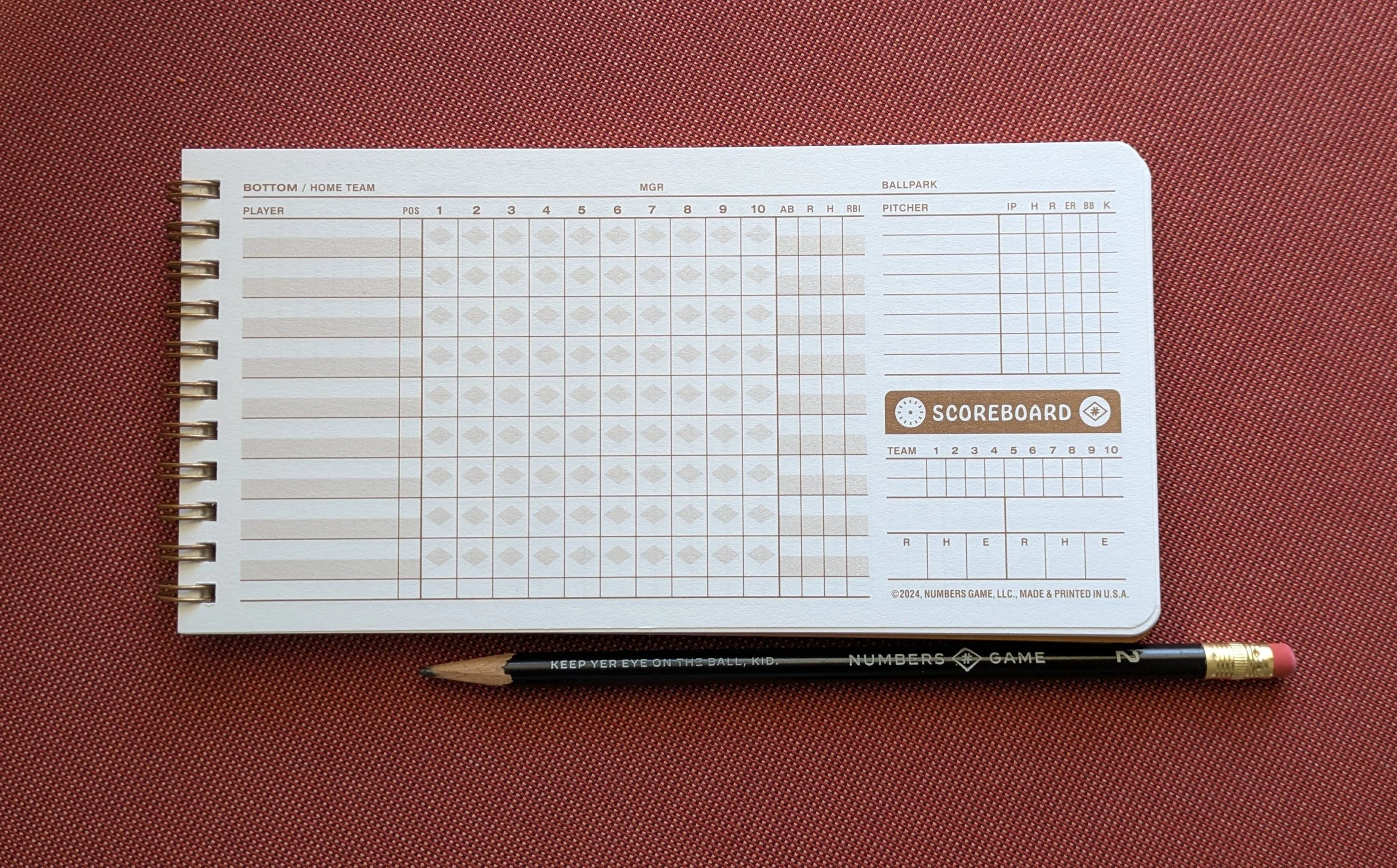
John Kuehl and John Rockwell have known each other since the summer between 7th and 8th grade when they met playing baseball. Kuehl still plays baseball, in a local 45 year or older league, and Rockwell threatens to join, though he’s worried he’ll be bad at it. They’ve known each other for decades, their friendship surviving the ups and downs of life and a cross-country move (and then back). They’re both Brewers fans. They also run a company selling scorebooks together.
Numbers Game’s mission is to promote the tradition of scorekeeping, the practice of marking down the details of a baseball game as it takes place. The company offers beautifully designed scorebooks and scorekeeping accoutrements for all types of scorekeepers, from the rigid to the casual. “I think we consider ourselves pretty casual scorekeepers, too, even though we do it a lot,” says Rockwell.
The idea behind the company came into being while Kuehl and Rockwell were playing shuffleboard. One night, they were discussing a better way to keep score at games. At the time, Rockwell would score pretty much every game he attended, and to do so, he’d usually grab one of the free scorecards provided by the stadium (most stadiums have since phased these out). He had been looking for a scorebook that would fit his needs and was struggling to find one that he liked enough to use.
With a background in graphic design and visual arts, Rockwell realized that he could just make the scorebook he was looking for. Kuehl recalls receiving a text that essentially read, "There needs to be a baseball scorebook that's actually good. We should make one." Thus, the idea for Numbers Game’s #22 scorebook came into being (The #22 comes from the year 2022, when the scorebook was designed, though the number also serves as a quiet tribute to Brewer Christian Yelich, who Rockwell calls an “underrated great.”).
When it came to the design of their ideal scorebook, the two Johns were looking to make something that stood apart from the rest of the scorebooks on the market, many of which were designed for coaches, with cheap paper, cheap binding, and a complicated layout. The Johns wanted to make something that had style and was well designed. It didn’t need to be as intense as a coach’s scorebook — in fact, it was better that it wasn’t, as it was important to both Johns to keep the notebooks friendly to those who didn’t know a ton about scorekeeping.
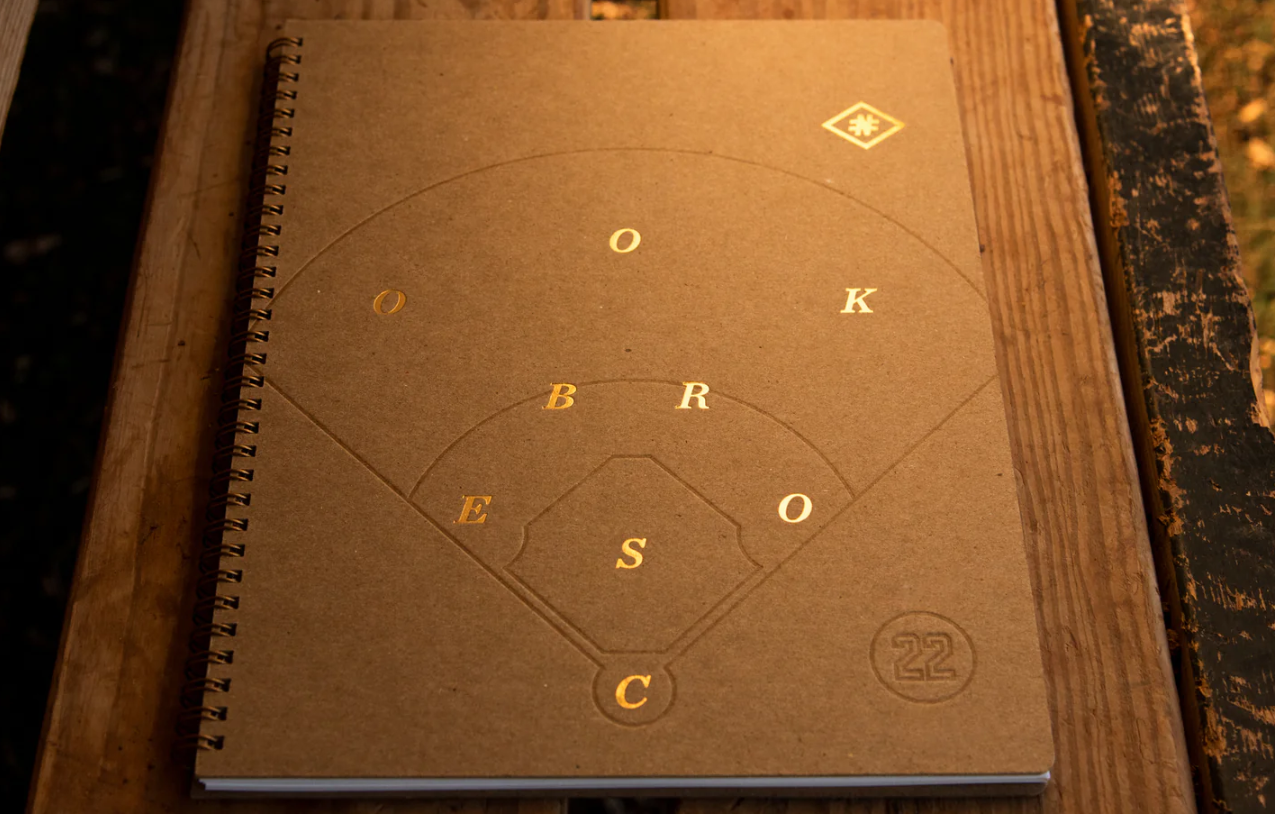
Numbers Game
The two Johns came up with a minimalistic notebook with a hint of gold foil on book board covers. The letters to spell out “scorebook” are individually placed on an embossed baseball diamond in the order of the baseball position numbering used in scorekeeping. Since then, they’ve also added a Pocket-Sized Scorebook (which also has an Artists Edition) made for a more casual scorekeeper, as well as single-game scorecards. The offerings are all designed, printed, and put together in the Johns’ native Wisconsin.
The scorebooks are fancy enough to make for nice gifts, which was about the height of Kuehl’s original ambitions. It came as a real surprise to him that there were so many people who were actually looking for an item like the Numbers Game scorebook to use in their own scorekeeping practice. “I think I underestimated how passionate and plentiful [scorekeepers] are,” he said. As Kuehl dug into the online communities dedicated to scorekeeping, he learned that folks who love to scorekeep baseball games are really into scorekeeping.
On the baseball scorecards subreddit, fans post photos of their cards, ask and answer questions, and showcase their different styles of scorekeeping. The online baseball scorecard community grew as Numbers Game launched a brand Discord as well, where fans chat teams, share their experiences, and debate pencil versus pen (Kuehl likes a Pilot Precise pen for the consistency. Rockwell uses pen and pencil, though he is frustrated by pencil’s smudging.) It’s baseball at its nerdiest.
As for why they scorekeep, Rockwell says it’s something he’s always been drawn to. “I'm a natural note maker and doodler. If I get a printed thing and I have a pen, I'll just make notes or sketch.” He doesn’t remember exactly when it all started, but he does remember that as a kid player he never got to keep the coach’s scorebook, “It always seemed really cool and sort of magical.”
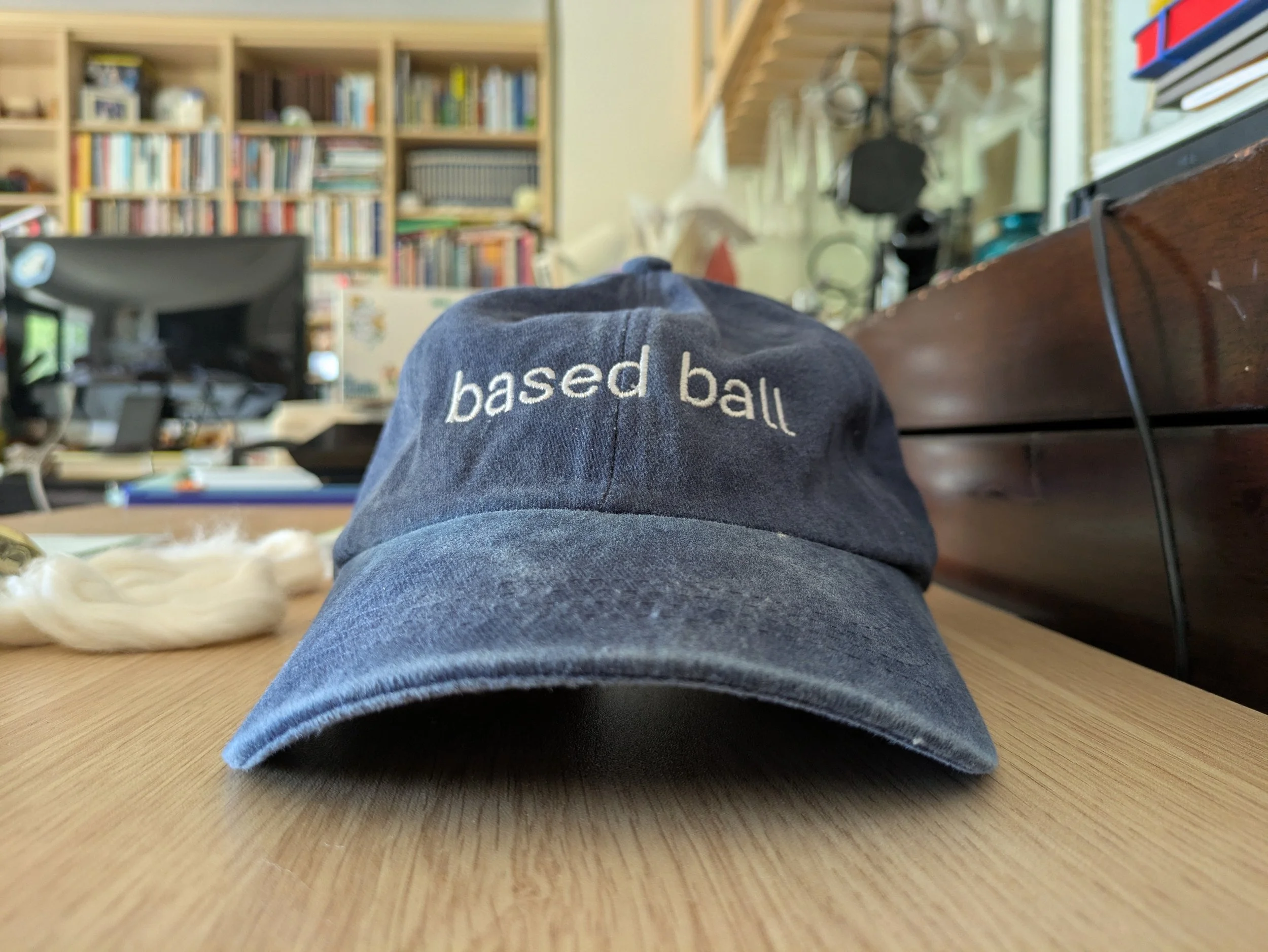
100% cotton baseball cap
Rockwell particularly likes the flexibility of scorekeeping and the freedom to try new things within the structure of the practice. “I still change. I feel like every season I’ll try something new,” he says, noting that even though there are guidelines on how to scorekeep, people are able to manage their own styles and keep track of what they find important or interesting.
Kuehl’s approach has changed over the few years he’s been scorekeeping. “My thinking has evolved. I'm not doing this to remember the game of 10 years. I'm doing it just to remember in the seventh inning, what happened in the third inning again? Kuehl also likes the unique personalities people bring to their cards. “Probably my favorite part of any score sheet that I look at is the game notes. You've got to have an area to just write down the stuff that you notice. I love reading what other people write, especially when they infuse personality and things they noticed in the stands about a fan. I like seeing what they put in the at-bat box. People who write player numbers for who advanced a runner versus not, and just like seeing how detailed or not people get.”
For those who want to start scorekeeping and don’t know where to start, Rockwell recommends checking out the front of your scorebook, which will often have a legend of each shorthand. YouTube is another great resource. As Rockwell says, “You pick it up quick, because it's like, there's a half a dozen things that you're pretty much writing over and over. It's like, fly ball, single, fly ball, strikeout. You just get tripped up when something crazy happens. That's where you got to ask somebody, ‘What? How do I do that?’"
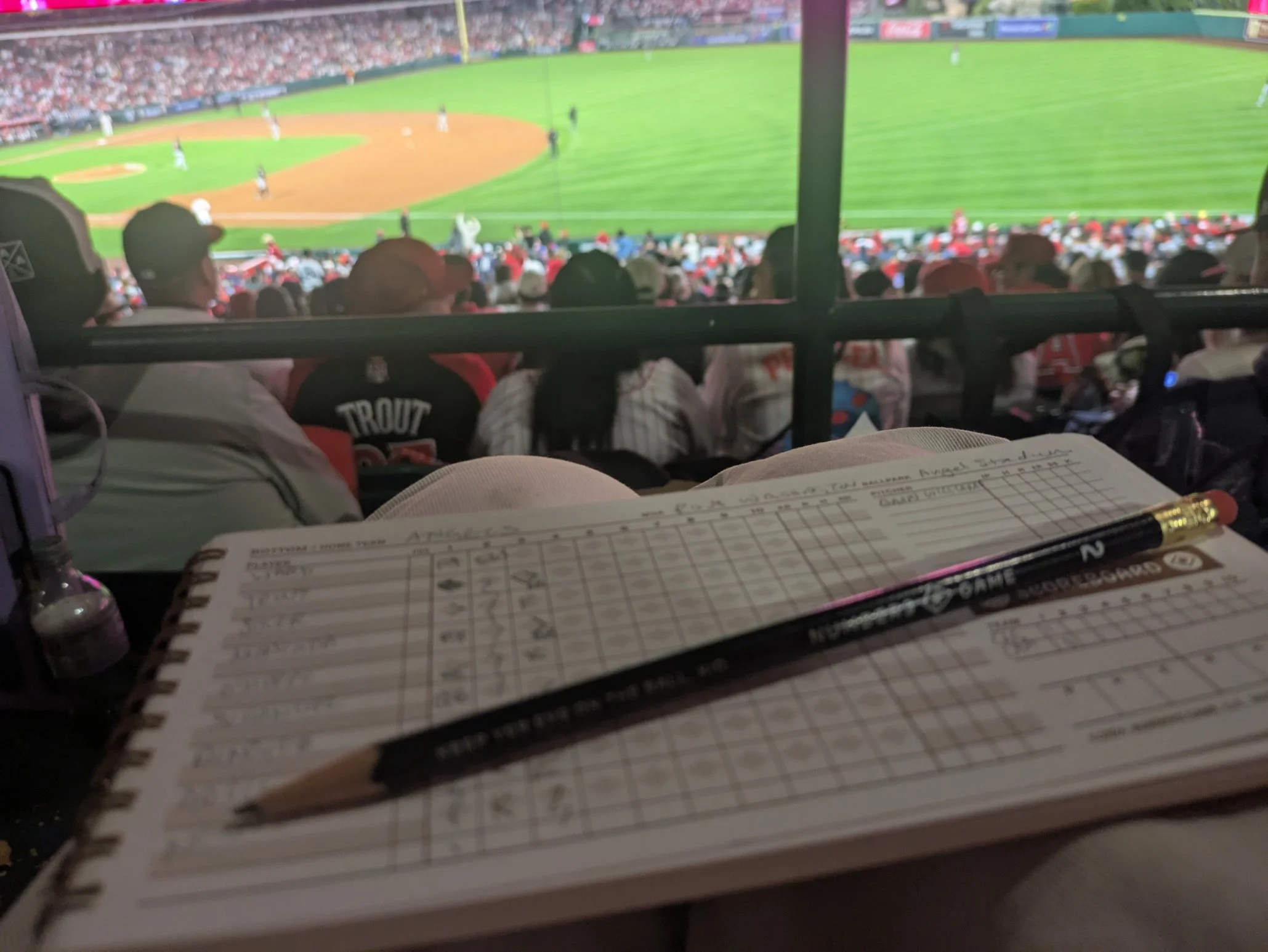
For what it’s worth, I took a Numbers Game Pocket-Sized Scorebook to a game with only a couple Youtube tutorials-worth of experience and fell into the rhythm of scorekeeping in just a few innings. Though, to be fair, nothing too wacky happened during that game. It was nice, as Kuehl pointed out, to be able to check what happened in the previous inning or during a player's last at bat. Plus, there was the added dimension of taking part in a decades-old tradition practiced by thousands of baseball fans before me.
Kuehl’s advice for beginning scorekeepers is to not be too exact about everything. Kuehl is a bit of a perfectionist, but it’s important to embrace that messiness at the start. “I think people need to feel just free in the beginning, to have it be messy because it will be. It's only for you. You're not turning it into the coach. You don't have to try to transfer that into some sort of staff book for the team. It's just for you."
