Fredrick Douglass, the boll weevil, and hip hop
Dr. Gerald Early on putting together a history of Black baseball in America
Disclosure: This article contains affiliate links, meaning The Fan Files will receive a small commission if you choose to purchase through any of the below links.
Perhaps the biggest baseball bona fides that Dr. Gerald Early has (at least to baseball fans) is that he was a consultant and guest in Ken Burns’ famed baseball documentary, but baseball has been a part of his life from childhood. Dr. Early grew up in Philadelphia as a fan of the Phillies and adored the Phillies’ first big Black star, Dick Allen. Now, he lives in St. Louis, and, according to him, “If you don't love the Cardinals in St. Louis, they're just about ready to have you burned at the stake as a heretic. This is Cardinal country.” Suffice to say, he roots for the Cards now.
Dr. Early also happens to an expert on all sorts of culture in general, including jazz, boxing, African American studies, and the Korean War. He’s a regular on NPR’s Fresh Air and has won a Whiting Award. Play Harder: The Triumph of Black Baseball in America, in collaboration with the Baseball Hall of Fame, found its origins when Dr. Early was serving as a consultant for a new exhibit at the Hall called Souls of the Game. In the following interview, Dr. Early and I chat what it was like for him to tackle such a big topic in a single book, Fredrick Douglass’ unexpected ties to baseball, and why it was important to include the boll weevil in this history of Black baseball.
The history of Black baseball in America is a very big topic. How do you approach a project like this?
I had been working with the Hall of Fame on this exhibit on Black baseball, going to meetings every month with four other people, plus the curators. In doing the exhibit, we marched through the entire history of Black people in baseball. Of course, a lot of stuff got cut because you can't put all that stuff in the exhibit. I was taking notes. "Oh, that might make a good story if we do a book."
That really helped me because I was around people who knew a tremendous amount about Black people in baseball. I got to understand what the dramatic high points were, other than just Jackie Robinson. That's the big high point that most people remember - the major leagues, but there were a lot of other high points.
If it hadn't been for those consultant meetings and the intensity of those meetings… I wouldn't say it would have been impossible for me to do the book, but it would have been harder because I would have had to do so many things from scratch.
There were other writers in this book. Were they also consultants in the exhibit?
Originally I think the concept was the book would be just a collection of essays, and the consultants would be in there, and then we would get some other people to do essays. When I got together with the publisher and with the people at the Hall who were overseeing the publication of the book, we all got together and said, "We should have essays interspersed in the book, but the book should be an ongoing narrative and it should be unfolding a story."
That's how it went. All the consultants are in the book, plus we got a few other people, like Courtney Cox and Shakeia Taylor, to write essays as well. They were selected because of the particular expertise they could bring. Courtney Cox wrote this essay about baseball and hip-hop, and I think that was a really important essay, because she wrote the essay not only showing her expertise with the connection between sports and hip-hop but also because she wrote it in a language with an attitude of hip-hop. I think it will resonate well with younger readers.
I think the whole idea with the book was to give you a history, but also to bring it up to the present so people would understand what the situation is now. The biggest questions being, of course, why are there so few Black players in Major League Baseball compared to the number that used to be in Major League Baseball? The other is, why aren't Black people baseball fans in the way that they used to be?
How did you decide which individual topics and figures to tackle?
Who's really important and who cannot possibly be left out of this story? Your obvious people, like Willie Mays, or Jackie Robinson, Hank Aaron, Satchel Paige, these people cannot possibly be left out of the story. At least part of their story needs to be told. There were the essential people.
Then there were the interesting people who were not necessarily big names, but who might be able to add something to the story. There's a little vignette in the book about Vada Pinson, who had been an outfielder for the Cincinnati Reds back in the 1960s. He got into an altercation with a white sports writer. It shows something about the tension between Blacks and the white press that was covering them back in the '60s. Vada Pinson, as good a player as he was, would not be a vital player that you would need to talk about in a book like this.
Was most of the research that was done for this book done for the exhibit, or were you researching outside the exhibit as well?
Oh, I was doing a ton of research outside the exhibit. Man, I had baseball books piled up on me. I must have taken out every baseball book in the libraries of St. Louis. I had them all, plus I had to buy some. I had to look stuff up in periodicals, because, let's say you're telling something about Reggie Jackson - one source will say something, and then you'll read another source that will give you something different about the same thing, but it will give the facts a little differently. That's when you have to start really digging in the weeds about things because you have to make sure that what you're saying is right.
Plus, the Hall was very helpful, too. They also have their fact checker who's checking on stuff.
Speaking of details, one of the figures that stood out in the book that I was not expecting was Frederick Douglass, who helped his son raise money for his baseball team. Is that common knowledge, or was that something that you dug up?
Some people know that, but I think a lot more people are going to know that now they've read this book. It had come up when we had our consultant meetings. I think it was Rowan Phillips who brought it up at the time. I didn't know that. I started digging and found out about his sons. It opened up in another way because it permitted me to tell a story about Black people in Washington after the Civil War.
One other surprising bit was the book's writing on Curt Flood. What I found really interesting is, just through legend, usually it's implied that he's blackballed from the sport. The book talks about how he deteriorates as a player too after his Supreme Court fight. Was that inclusion to add more nuance to the legend?
I think we were all pretty convinced we wanted to give a complete story, and also to talk about Curt Flood’s complexity as a person, and what it cost him to do what he did. In a lot of ways, I think he was heartbroken about it all. I think the fact that the Cardinals traded him after he had given all these great years to the Cardinals, I think it actually really hurt him emotionally. It's like being discarded, in a way. "You served your use for us, and now we're passing you along."
I think my own thinking was that I wanted to get a full, complete, complex picture of him and a full sense of what happened with him. Yes, it helped open the door for free agency, but it cost him, and in a way, what happened to him was tragic.
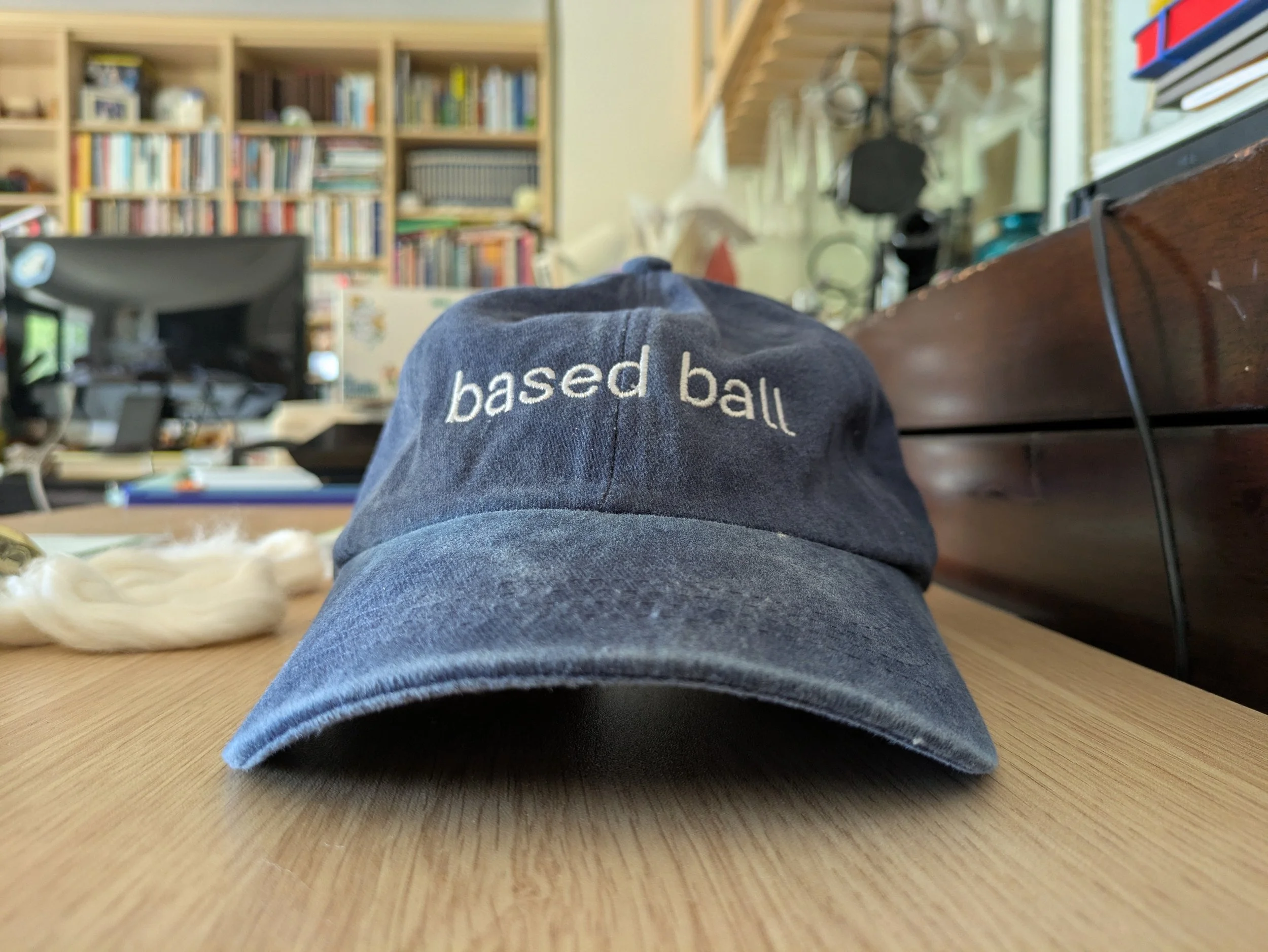
100% cotton baseball cap
One of the throughlines of the book, including with the Curt Flood story, was the emphasis of capitalism with the game for Black Americans. Were there similar movements in other parts of entertainment or sports in Black communities?
I would say that of all the businesses Black people started, let's say between 1920 and 1960, Black baseball would be among the most impressive. It's important to understand baseball that Black people saw baseball as establishing an important business. It was important for Black people in their sense of development that they felt that they could run a league. In order for these baseball players to develop, it had to be to some degree that Black people supported them, or at least supported them enough for these people to have time to go out and play baseball. It takes time to train a baseball player to be really good. That takes a certain amount of money. It takes coaching. The Black community had developed to a point where they were supporting this enough to be able to have leagues.
Now, in so far as Black people and business goes, baseball was not the only important business venture that Black people went into. Music, of course, was something that Black people have always been identified with, and Black people have tried many business ventures with music. They weren't terribly successful at being able to sustain a record company until Motown Records in the late 1950s.
Black people also established hair care businesses. This was particularly true for Black women's hair care. The most famous figure for that was a woman named Annie Malone, who started something called Poro College. She came up with different products for Black women's hair care. One of the women she had selling the product was a woman who became more famous than Annie Malone, a woman named Madam CJ Walker, who wound up becoming a really big name, becoming the first Black millionaire. Black women's hair care products was one of the biggest businesses that Black people had. It was probably a bigger business than baseball. At least as big as what baseball was.
Also tied to the history of the development of the sport, it was really interesting to see the mention of the boll weevil that wrecked cotton crops and how that affected baseball history. Why do you think it's important to highlight these sorts of details?
I think it's important for people to know that these factors affect how people live. First of all, they affected people's migration. These factors had a lot to do with Black people leaving the South and going to the North, and going to big cities helped to make Black baseball possible and profitable because you needed to have a sufficient number of Black people living in places to go to the games.
In that regard, the people needed to know what was making Black people move. In many ways, my book is a sports book, but it's also a social history book. Black people becoming urban was very important in the spread of baseball. I know people always want to look at it as something that happened in some fields in the Midwest, but baseball is actually a very urban game.
I think telling people about the conditions that Black people were under, why Black people migrated, what life was like for Black people when they moved to cities, I thought of all those things as being very important for people to fully understand the story of baseball.
I was curious when I was reading the book, how did the Negro Leagues set up their schedules? Was this by mail? Were people having meetings?
It was difficult to set up schedules, they would have league meetings, the equivalent of what baseball has with the winter meetings. The biggest problem they had with the schedules is that they didn't make a lot of money having league games. In order for the team to be solvent, they had to do all this barnstorming. The league games do not indicate the number of games these men played. These men played a ton more games than that.
It also affected the conditions under which you had to play. The biggest problem was controlling the venues. This is where the Negro Leagues really were at a disadvantage because they didn't control where they played. If they were using Major League parks, they had to schedule games when the Major League parks weren't being used for something. You were secondary because, of course, if you were going to use Griffin Stadium in Washington, DC, they're going to keep the best dates for their team because it's their stadium. You’re at the mercy of basically renting Major and Minor League stadiums to play.
The Negro League teams owned very, very few stadiums. That made it difficult in so far as being able to make a schedule that would really be optimum for you to be able to make money. You have to give people credit that they stuck it out despite those challenges.
One of the great parts of this book is the photos. Did you have a favorite photo in the book?
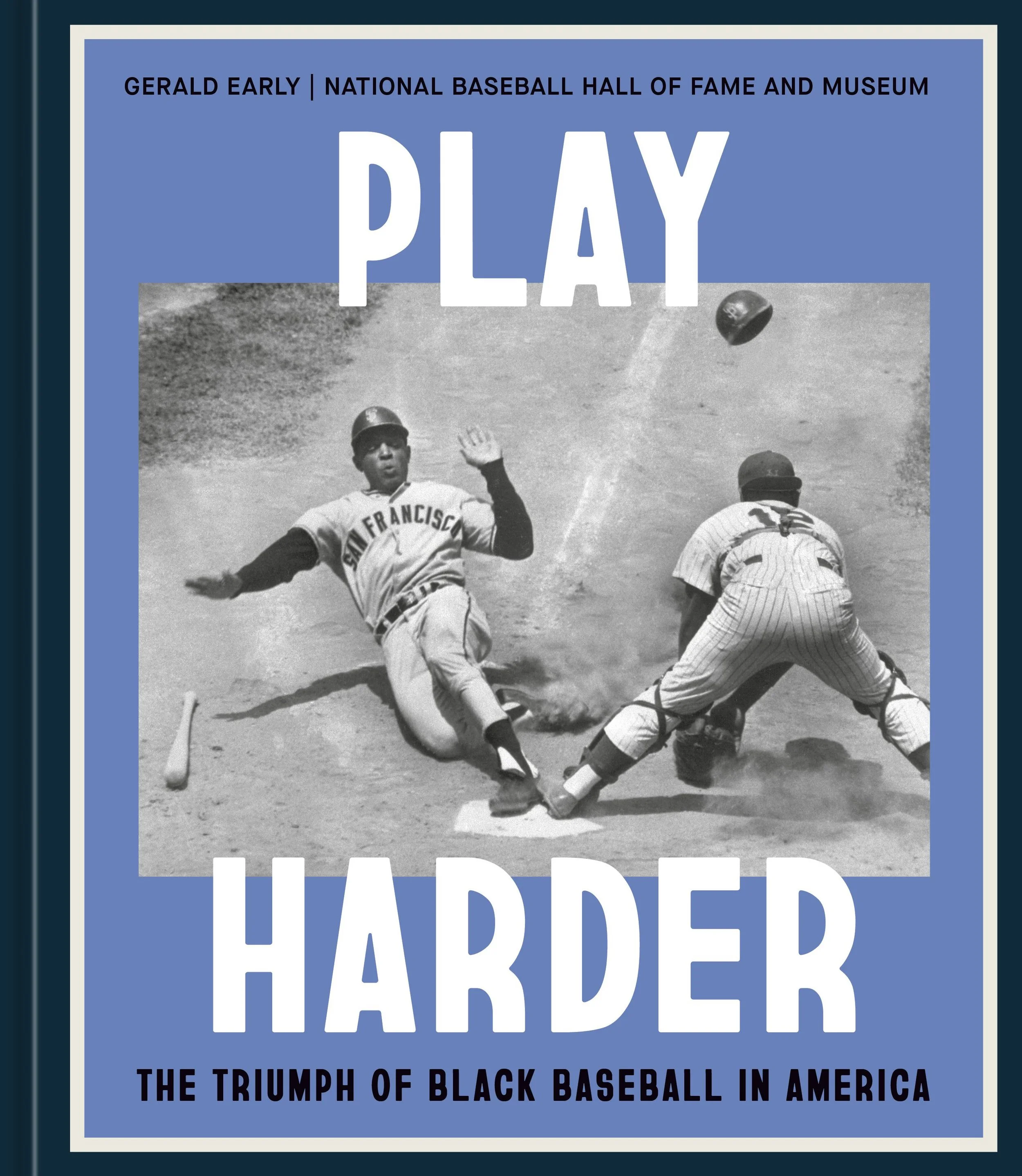
My favorite photo was the one on the cover of Willie Mays sliding home. I remember we talked about the cover and I said to the publisher, "It has to be an action photo." I was very glad they picked Mays because at the time we were working on the book, I think he had just died. I thought that was a nice tribute to have. I thought the photos from the Hall, I thought they were really, really powerful.
One last question. Is there any particular tidbit or character or person that you had to leave out of the book that you wish was in the book?
I wish I could have said more about Buck O'Neill in the book than I did, but because of space limitations, some things had to get cut. I had done a vignette of a Negro Leagues owner named JB Martin. He owned a team called the Memphis Red Sox, and he didn't go along with what the white people in Memphis wanted him to do. He was supporting a candidate they didn't want him to support. They ran him out of town. They destroyed his businesses there. He was a pharmacist. I thought it was a really powerful story.
Another thing I really wanted to have in the book was the story of Jackie Robinson's court-martial. That all got cut. It wounds me that some of these things were cut. I wish that I could have said more about a player like Willie Randolph. I wish I could have said more about Ozzie Smith. I wish I could have said more about a bunch of players. Some of the stuff I did write up, but when crunch time came, stuff had to be cut. People had to make choices and they didn't ask me. They were wise. Other people with cooler heads made the choices, and they did the right thing.
There’s always the possibility of a second book.
I always console myself by saying that I can put out Play Harder Volume 2.
Play Harder: The Triumph of Black Baseball in America is written by Dr. Gerald Early and the National Baseball Hall of Fame and Museum and published by Ten Speed Press.