Heroes from a Different Era: An interview with Mark Chiarello
Mark Chiarello
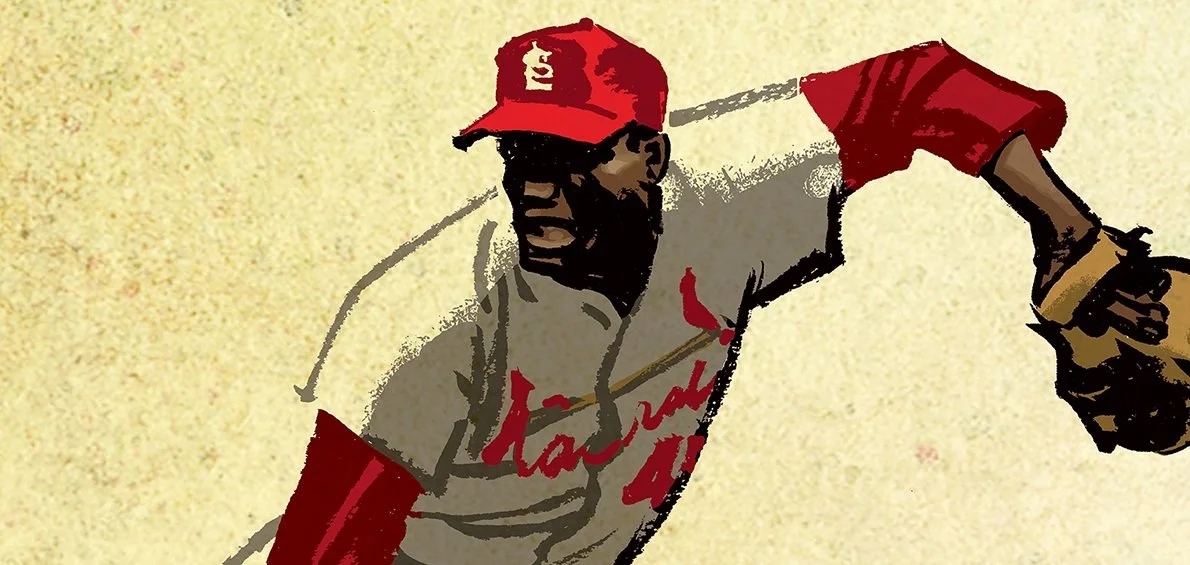
My writing background is in comics, and one of the joys of becoming a baseball fan is finding out how many comics people are also into baseball. Mark Chiarello is an artist and editor who served as art director at DC Comics for nearly three decades. He created the iconic Batman: Black and White and Wednesday Comics projects and edited industry-changing books like New Frontier.
Chiarello has also illustrated baseball cards and self-published a baseball book with author Nev Yomtov titled Baseball 100. Recently, he illustrated the covers for Past Time, a baseball vampire comic we covered here at The Fan Files just last month. In the following conversation, Chiarello chats about how he got into baseball, what makes a good baseball card, and, of course, Superman.
How’d you get into baseball?
Boy, that's the grand question, isn't it? Growing up in New York and New Jersey, the tradition of the Yankees, my dad was a baseball fan from the Joe DiMaggio days. My oldest brother was a fan from the Mickey Mantle days. My middle brother was a fan from the Thurman Munson days. I just fell right into line and fell in love with it immediately, collecting baseball cards and going to games at Yankee Stadium.
Speaking of baseball cards, how did you first get involved with illustrating baseball cards?
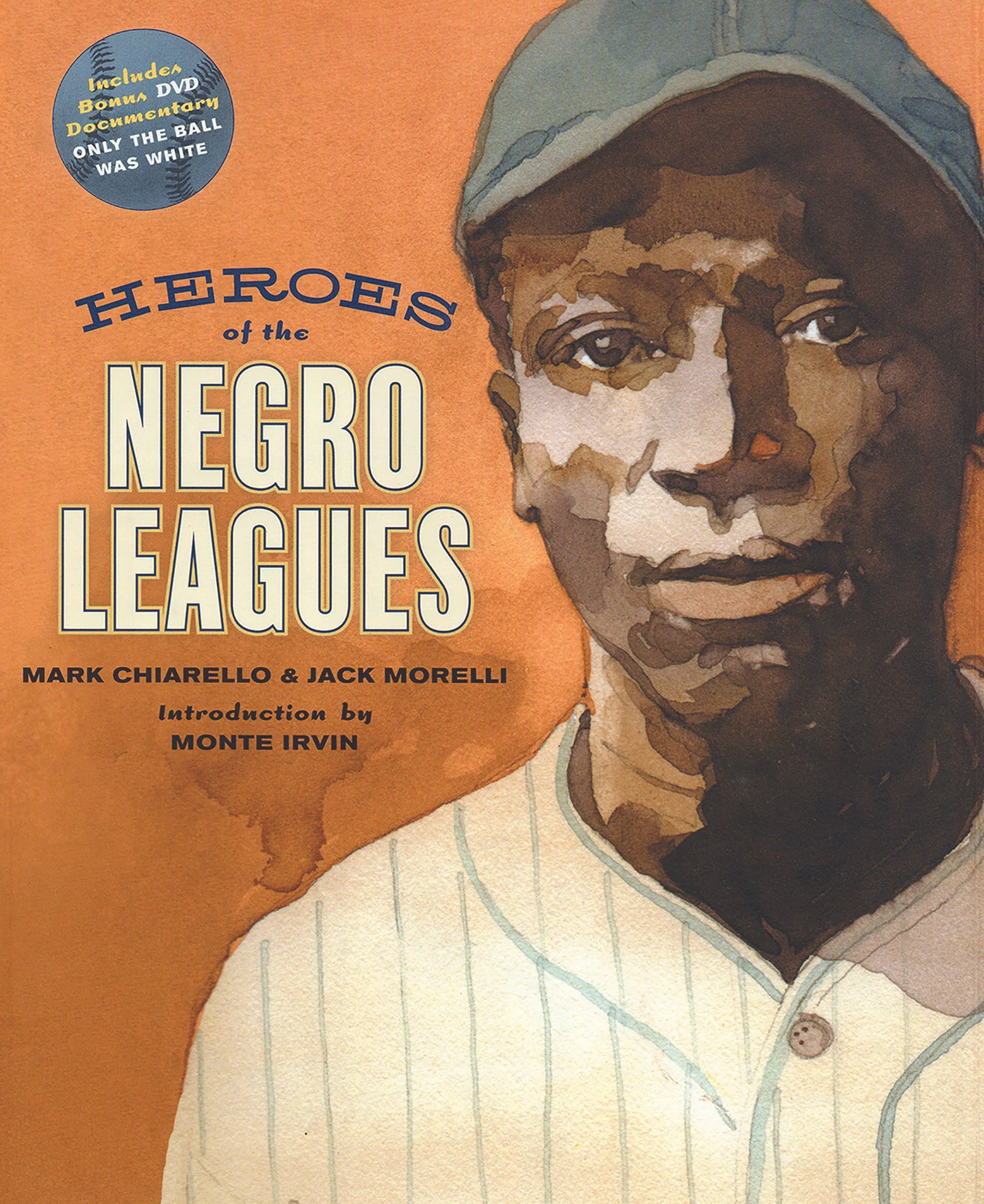
There was a comic company called Eclipse Comics in the-- I guess the '80s was their heyday. They were doing card sets, but political card sets. Bill Sienkiewicz did some gorgeous ones. The Iran-Contra card set, the serial killer card set, the JFK assassination conspiracy card set. They asked me if I wanted to do [one] and asked me what topic, and I said, "I want to do the Negro Leagues." They were like, "Wow, that's really politically awesome." I said, "No, dude, I'm not doing it for politics. I'm doing it because I love baseball."
Research wise, your friend Graig Kreindler and I were talking about this last month, there's fewer resources to draw upon for the Negro Leagues players. How did you approach that aspect of the project?
I love research. This was in the late '80s, and there had been no Negro League baseball cards with bios on the back. We did the first set. My best friend, Jack Morelli, wrote them. He lives up near Woodstock, Upstate New York. I would go visit him. We'd go up to the Hall of Fame and do a lot of research and go through their back files and see scouting reports on Satchel Paige. Old photographs of Josh Gibson. It was really cool.
Then I did a lot of research at the Schomburg Library in Harlem, and they have quite a collection of photos, but there were a few players that there's two existing photographs of, or there's one existing photograph of. There was a great player named Turkey Stearnes, who played for the Detroit Stars. There's about three photographs of him, but they're all team photos, and they're all a little blurry, and you really can't get a good sense of what he looked like. I somehow stumbled across his driver's license from Detroit. The photograph was a beautiful portrait, but he had a fedora on in the photograph, so I had to redraw it with his baseball cap on and put him in a baseball jersey.
Mark Chiarello
That driver's license seems like such a big discovery. Were there any other weird ways you found images for your cards?
There was a small handful of collectors. The Negro Leagues have blossomed since then. I got to be friends with some of the collectors of rare photographs of the players. Obviously, when they played in the '20s, '30s, '40s, there were no baseball cards of these guys at all from America. They would play winter ball in South American countries; Cuba and Venezuela, Puerto Rico. They would put out baseball cards of these players, and some of the images are beautiful. Getting to know these collectors, they would let me borrow some of the cards, and I worked my paintings from that reference.
What makes a good baseball card illustration?
I really am in love with the history of baseball, the nostalgia of baseball, what baseball was. I love the old 1930s and '40s and '50s uniforms, the big woolen baggy... They're really fun to draw because they're chunky shapes. From the late '70s, the '80s, the '90s, the polyester uniforms of today, they're not that much fun to draw. I like capturing what baseball used to be years and years ago, actually before my time. Those guys looked of a different era. They looked like heroes from a different era.
You've also self-published a baseball book Baseball 100. Can you tell me about that project?
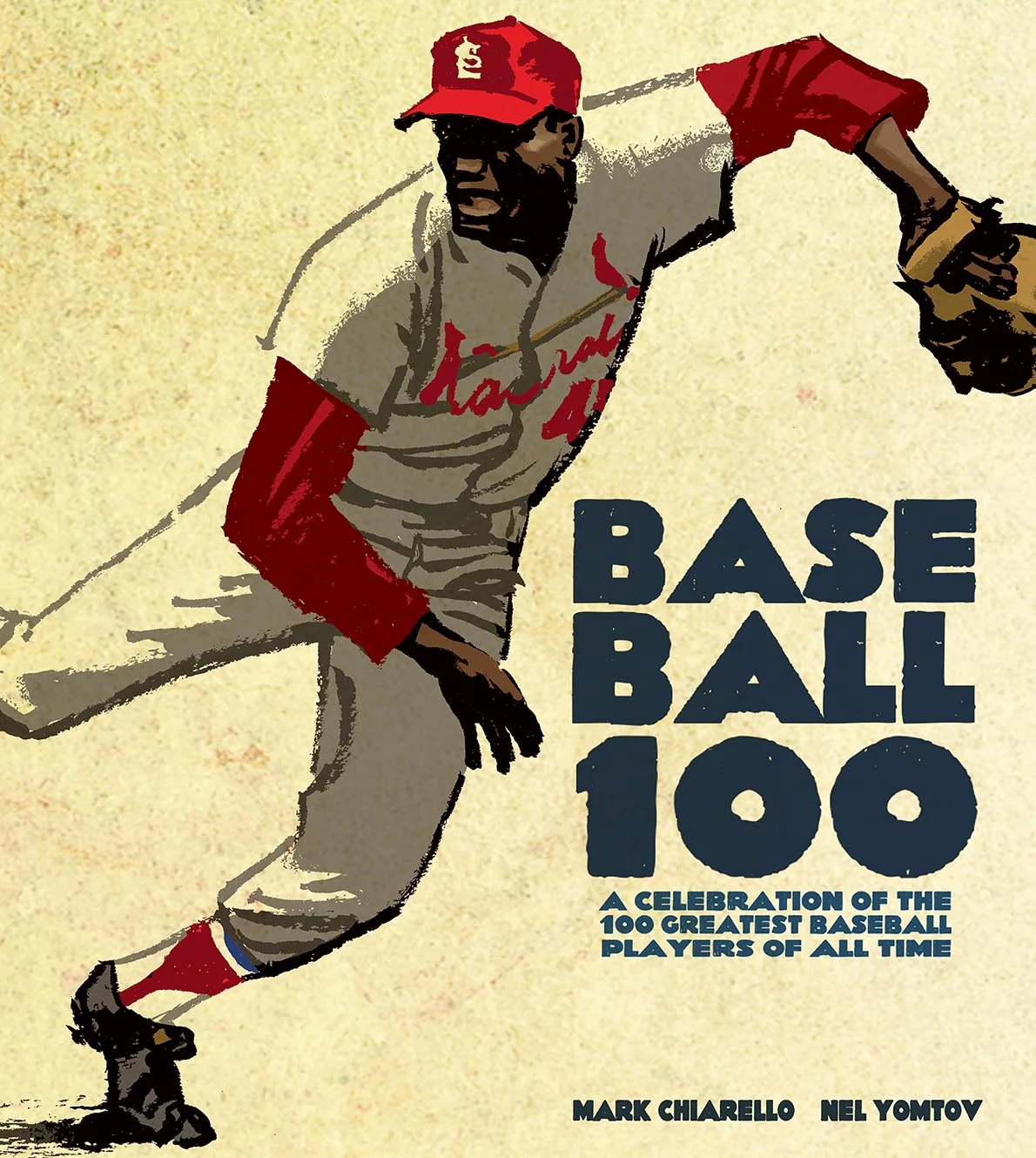
I was the art director at DC Comics for almost 30 years, and it was a great job, a fabulous job, but as an artist, I wasn't drawing very much. On weekends, I would do a drawing of a baseball player, one of my favorite baseball players, just for fun. Over the course of a couple of years, I accumulated all these drawings of baseball players and I thought, "Maybe I'll do a whole book about the 100 best players." That was the genesis of the project, really.
My good pal, Nel Yomtov, wrote the bios, and I did all the drawings and self-published it through Kickstarter. We took five years to come up with the list of who are the 100 greatest baseball players. Of course, there's no such truth to those lists. They're just fun. I hope one day when I get to heaven, Saint Peter will say, "Here's the real list."
I've heard from people who bought the book, "How dare you put Nolan Ryan as number 57. He should be the best pitcher ever." Yes, yes, whatever.
Mark Chiarello
Baseball fans like to argue. I've realized it's not that different from the comics world. Speaking of comics world, how often does baseball intersect with your comics career?
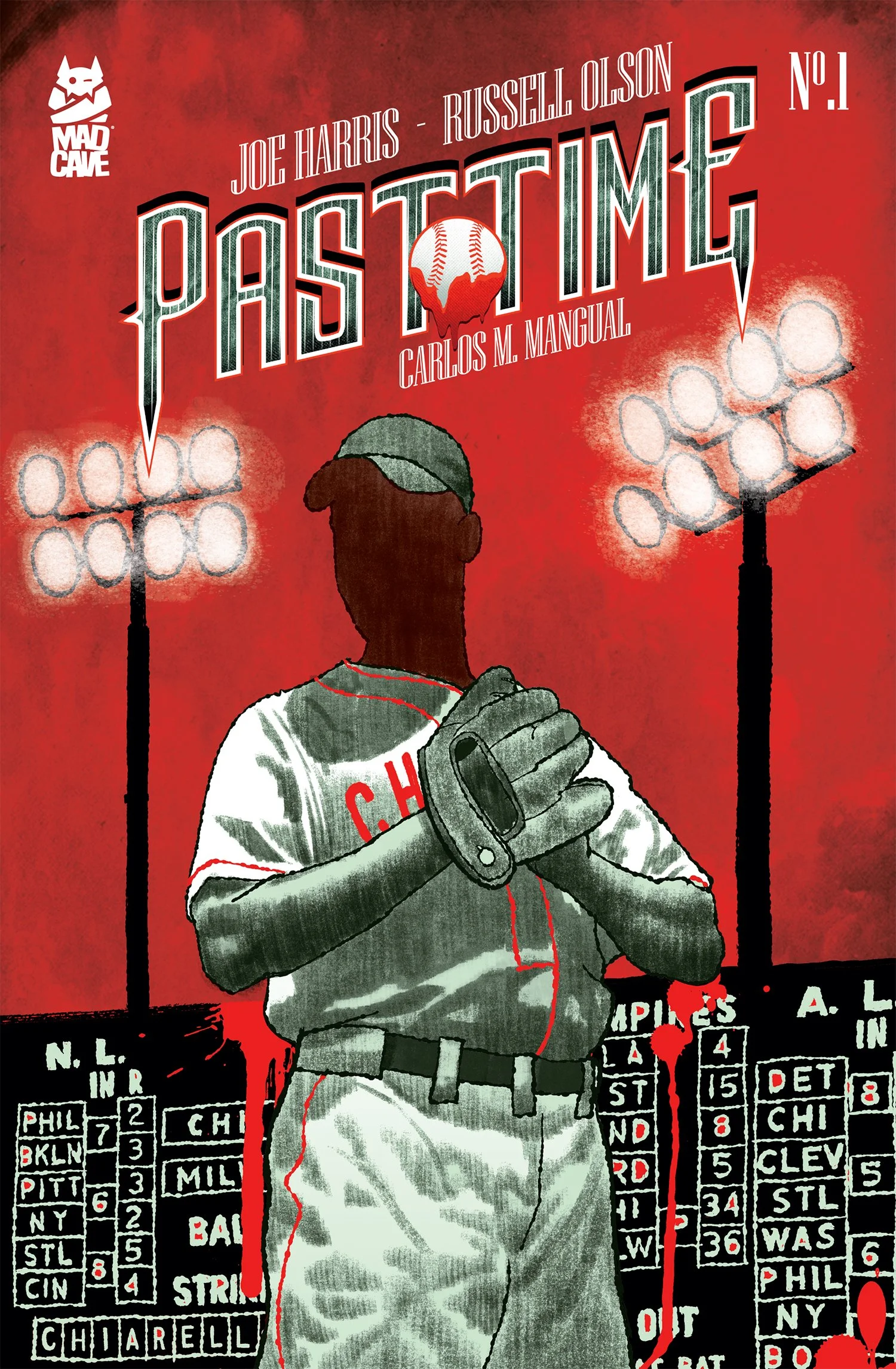
Never ever until just recently. I got a call from an editor at Mad Cave Studios, really great editor, Mike Marts, -- He used to be the Batman editor at DC. He's got my Negro Leagues book, and he's got my Baseball 100 book. He said, "Mark, I'm going to offer you a job of doing covers for our new comic series, but I'm going to typecast you. It's about baseball in the 1930s."
[Editor’s note! Check out an excerpt of this new baseball comic AND an interview with the creators here]
I was like, "Cool, sign me up." He goes, "Wait, but it's also vampires, so you have to do baseball and horror at the same time." It was a fun job. It was a really fun job, doing the covers for the five issues. That's the only time baseball has really crossed over into comics for me, at least.
based ball ballcap
100% cotton
Shop Now
How different is it to design a comic cover versus designing a baseball card?
Not as different as you would think. They have to be iconic. Comic covers are posters that are intended to sell that comic. Graphics and dynamics and color, they all play into that. A baseball card is similar in that you're advertising that player. What's the most iconic image you can come up with of Ohtani or Aaron Judge? I think they are somewhat related.
Mark Chiarello
How did you get into comics?
Like many kids of my generation, I grew up on the Adam West Batman TV show, and it was our lives. We were obsessed with that show. Batman T-shirts and posters and record albums, everything was Batman to us for a few years. That sort of scarred me for life. Then right after that, Marvel did cartoons. They did the Fantastic Four cartoon in the late '60s and the Spider-Man cartoon. I loved those. Those were great. I would watch those, the Batman show and the Marvel cartoons. Oddly, I never connected that you could go buy comic books someplace.
My buddy Mike down the street, my best friend as kids, his brother had some Marvel comics, some Spider-Man, John Romita comics from the '60s. I was like, "Oh my God, where can we get these? I have to go buy them." It's been a lifelong love affair. I love the medium. I love comics. I realize every day how lucky I've been to be part of drawing my heroes, whether they're Thurman Munson or Bobby Murcer or Spider-Man or Batman.
It's interesting because you were talking earlier about this nostalgia and this hearkening back to a golden age. You edited Darwyn Cooke's New Frontier, which is also, in my mind, very much the same ethos. Does nostalgia draw you to specific projects or is that just personal taste?
I think both. I'm a real nostalgist. I love the origin of comics. Darwyn was a good friend. I discovered him, edited a lot of his work. Brilliant writer, brilliant artist. I remember him once saying to me his version of the characters, the Flash, Green Lantern, Batman, he would go back to the original creator's intent of what that character should be. I like that idea.
I think because you have to publish 300 comics every month, sometimes publishers lose their way when it comes to who the character really is because you always have to put out more and more products. Let's turn the JLA into eight, or whatever. Everything's a stunt. I like the old comics. I like the core of who those characters were intended to be.
Recently at C2E2 you chatted with my friend Dave Buesing over at my old stomping grounds Popverse, about a project called Tall Tales, where you wanted to get different famous people to do Superman and everyone said no. Do you feel like times have changed now, and people would say yes?
No.
Still no?
No, I don't. I think sometimes we kid ourselves to think that celebrities are just like us. They're not. They're not at all. For that project, I approached Howard Stern's people to write an eight-page humorous Superman story for that project. I spoke to his right-hand man, Baba Booey, Gary Dell'Abate. You know when I said, I know Howard's a big comic book fan, his uncle was a comic book artist, he talks about comic books all the time, then Gary said, "There's no way Howard's going to do this. Don't even pursue it. He's just not going to do it."
It was heartbreaking because it was a cool project.
For that project, I made a list of the 60 greatest writers in America, and I'm talking the greatest. Maya Angelou and great comedy writers, Jerry Seinfeld, and great lyricists, Paul Simon, and Bernie Taupin. I really was hoping that Maya Angelou would have said yes, because I can only imagine what Maya Angelou would write about, a little Black girl in Harlem talking to Superman. What would that conversation be like?
Again, I was really disappointed that everyone said no, which ties into, again, the Negro Leagues.
I have met a few of the old players. Most of them are dead now, if not all of them. Of the real Negro Leaguers, before the breaking of the color barrier, there may be five Negro Leaguers still alive. I was fortunate 25 years ago to meet some of the great ones. Monte Irvin and "Double Duty" Radcliffe. Their stories were just beautiful and phenomenal. We tend to typecast them as, "Oh, you got cheated in life. Oh, you got screwed out of playing. You must be bitter."
That's only looking at a human being from one perspective. Monte Irvin loved baseball. I met the great, famous Buck O'Neil. What a deliciously wonderful, amazing, sweet guy. He said, "I'm not bitter. I've had a great life. I got to play baseball." He didn't get to play baseball in the major leagues, but he was really cool about it. The Negro Leagues were a lot of college graduates. We don't generally think of those guys as college graduates. All different kinds of people.
You mentioned the Negro Leagues before, but is there one other aspect of baseball history that you feel like people should know more about?
It does tie the conversation full circle, in that I'm not a baseball fan anymore. I stopped about two years ago because baseball is not what it used to be. When I was a kid and Reggie Jackson was on the Yankees, Reggie was an asshole. He was a real me-first narcissist, but he was the only one in all of baseball. You loved him even though he was this self-promoting athlete. Now it seems to me everybody's like that.
My favorite player was Don Mattingly from the Yankees from the '80s and '90s, because, to me, he was a throwback to what baseball used to be. He didn't do steroids. Everybody was doing steroids, he didn't do steroids. He went out and played as hard as he could. He was a phenomenal player. I met him once, and he was a really decent guy. I don't mean to be a downer about what the sport is now, but to me, that's what's missing about sports, and I wish kids could experience what it was.