From Comic Con to Fanatics Fest
I’ve known Mike Armstrong for a few years now. We worked together at ReedPop, the events company behind shows like New York Comic Con and Emerald City Comic Con (I worked at ReedPop’s pop culture website Popverse). Armstrong left ReedPop alongside Lance Fensterman for a very cool secret job which ended up being Senior Vice President of the brand new Fanatics Events. Mainly, that means he helps run Fanatics Fest.
In his free time, Armstrong also does research for the Society for American Baseball Research (better known as SABR) looking up information about dead baseball players. In the following conversation, we chat the birth of Fanatics Fest, what to expect from Fanatics Games, and what it’s like to conduct research for SABR’s Baseball Necrology group.
First things first, tell me what you do at Fanatics.
Michael Armstrong: My title is Senior Vice President of Fanatics Events. We are a small team, we're about 24 people who have been tasked with creating the greatest sports festival ever known to man, and that is Fanatics Fest NYC. We are solely focused right now on making sure Fanatics Fest is amazing from a fan's perspective, that our partners at Fanatics have a great time. We're here to make fans happy, and that's our number one goal.
How much of your old job at ReedPop carried over into the new job?
A lot. I'll be honest with you, we used to always make this joke when we were at ReedPop. Way back in the day, we ran a show called UFC Fan Expo, and the fans at UFC Fan Expo were very similar to fans at Comic Con; they just happened to be wearing Affliction shirts instead of Marvel shirts. Fans at conventions like this, they all want the same things: they want access to meet their heroes, they want exclusive merchandise, and they want a great experience. That's the stuff that we've been focusing on. The jerseys people are wearing are different, and the athletes sitting behind the table are different than the wonderful voice actors that we used to have it at ReedPop. A lot of the dynamics are really similar.
For you, what's the central mission of Fanatics Fest?
I think the central mission of Fanatics Fest is to showcase the breadth of Fanatics. There are a number of different divisions, whether it's Topps, or whether it's our partnership with Lids, or if it's the team at Authentics that handles all the athlete relationships. There's just so much at our disposal that we are the only organization, I think, that can pull off what we're attempting to pull off with the growth of Fanatics Fest. Fanatics is so deeply entwined with all the different leagues that it's a quick phone call to the MLB, or the WWE, or whoever to get them excited about a show like this.
We want to bring fans together, and we want to showcase everything that Fanatics has, but ultimately, our goal is to make people feel good about Fanatics. Our intention is to just take everything that we've got at our disposal to build the best possible fan experiences that we can.
Is it different securing secure athlete guest versus a movie star guest, or is it a similar process?
It's just a little bit different. I think in the past, we'd work with a Marvel actor, and we'd have them at the show all day, and they would do photos and autographs and panels until they dropped. At Fanatics, the dynamic with athletes and the traditional card shows that they do, they appear for a couple of hours, and then they're out the door. To us, it's a little bit more challenging because we have so much demand for photos and autos and for these athletes' time, and we have so many fans who want to have that access, but we just simply don't have the capacity.
It's rare for us to sell out of a B or a C-list actor at a ReedPop show, and here, I can't tell you how many people have sold out over the course of a two-hour on-sale. I think we make up for that in quantity and quality, obviously. We have probably close to 250 to 300 athletes who are going to be appearing at Fanatics Fest. Some of them are just doing appearances, some of them are doing Fanatics games, and some of them are doing photos and autos. At Emerald City Comic Con, we would have 30 or 40, so we're just working with different math.
What was the most surprising thing about the first year's show?
The passionate fandom of WWE, and I think it's the thing that I like engaging with the most. I should mention that we do considerable business with the WWE. We run WWE World, which is their fan event that lives alongside WrestleMania, and we hope to extend that to a few other events soon. It's the group of fans that I like the most just because it's the most similar to Comic Con fans, and I just have this soft spot for all of them because they are intensely devoted to these larger-than-life characters. It's different than going to get a photo op with a Yankee or a photo op with a New York Ranger.
When somebody has a photo op with Cody Rhodes or Rhea Ripley, you're changing their life. It's not transactional, it's much more emotional. To see the look on their faces when they're able to have that experience is something that I really enjoy. I don't want to diminish the amount of emotion that goes into sports because I'm certainly guilty of it as much as anybody else.
Tell me about Fanatics Games.
The simplest way to phrase it is Pros vs. Joes. We've got 50 of the top athletes from around the world, and we're in the process of selecting 50 fans who are going to compete against each other in eight different activities at Fanatics Fest. The MLB has the pitch accuracy, the WWE has a superstar entrance, the NFL is doing a football tossing accuracy event, and the NHL is doing how many pucks can you hit into the washer/dryer, and we compile those scores, and whoever wins gets $1 million cash. Second place gets a Ferrari, third place gets a $250,000 LeBron James rookie card.
I'm fascinated with this because there are very talented athletes who are participating, but are they good athletes in everything? Is Tom Brady going to-- I guess he was a baseball player as well, but is Tom Brady going to be good at the NHL booth? Is he going to have a great WWE walkout? I think, in some of the videos that we've seen from these well-rounded athletes who are amateurs, seeing the skills that they display in some of the entrance videos is fascinating.
Is this going to be on a stage? Is this going to be behind a closed door and on video? How's it going to go?
No, it's right out in the open. There are just eight giant booths on the show floor, and we've got a path that everyone needs to take, like a golf tee time, and they start at this booth and they go to this booth next, and they're just compiling their scores along the way. One of the things I like most about this show is that the talent is out in the open. They're going to do their photos and autos behind a desk and behind a curtain, but when they're not, they're walking the floor and they're going to the different league activations. A lot of them last year were in the card dealer area buying cards. They are fans too, and they're out there in the midst of everything.
Just the sight of seeing eight state troopers flanking Tom Brady or Dana White or Travis Scott last year, that's seared into my memory.
Let's get away from Fanatics now and talk about your SABR work. How long have you been part of SABR?
Probably close to 10 or 15 years. Originally, I used it as networking to get a job because I spent a couple of years in minor league baseball before I got into the convention racket and was looking for that to be a conversation starter when it came to finding a job in baseball operations or whatever it was. I just fell in love with the community and the information and the access that you get to certain databases that would, on their own, cost you a ton of money. I wouldn't say I'm terribly active. My foible is, or my beat, I guess, is the Baseball Necrology group, which I've grown to love.
When I tell people I do this, they are like, "Oh, that sounds pretty weird," because basically I search databases, Social Security databases, Find a Grave databases to find baseball players and find the date of their death and where they're buried. I forget how I really got into it, but I guess I've always considered myself a completionist. When you look on Baseball Reference and you see that somebody was born and is probably of an age where they're probably not around anymore, you start to wonder what happened, where'd they go, what did they do after baseball?
There's a feeling of satisfaction when you can essentially tell the full story of somebody and just acknowledge the work that they did, and acknowledge their passing and move on to the next one. There's a handful of us who are pretty active in there. Aside from that, just the research journals that come out. I'm a huge baseball fan for all eras. I don't know if you can see my bookshelf behind me, but it's packed with old baseball research journals and books that I hope to get to one day.
When you're sitting down to research a player, what does that process look like?
I'll go to a team page on Baseball Reference. Let's say it's a 1930 New York Penn League team. You can pretty much guarantee that everyone who was on that team in 1930 is not with us any longer. Then you just start clicking on the names and seeing who's got a complete profile, who doesn't. You find the ones who don't, and you just start doing some digging. Find a Grave is a wonderful resource, and just the capability that you've got on there to search for somebody's location and keywords of what might have been in their obituary, that's a very valuable one.
For the older ones, one of the benefits of SABR is access to newspapers.com. You can go in and search names and try to determine whether or not the person that you think you've found is that person. My two favorite categories in doing this work are the people who don't acknowledge their playing career in their obituary at all, and then the people who way overblow what they actually did.
I was looking at somebody a couple of weeks ago and said that they faced X pitcher in the major leagues and had this long of a career and all of this stuff, and a couple of quick clicks, you can find that that wasn't actually true. You just think about how stories in a family perpetuate. Even more fascinating are the people who might have been bitter about their career and don't acknowledge it at all, and their family might not know what happened. You make these stories up about people, and you try to find as much actual truth as you can in the work.
What's your baseball story?
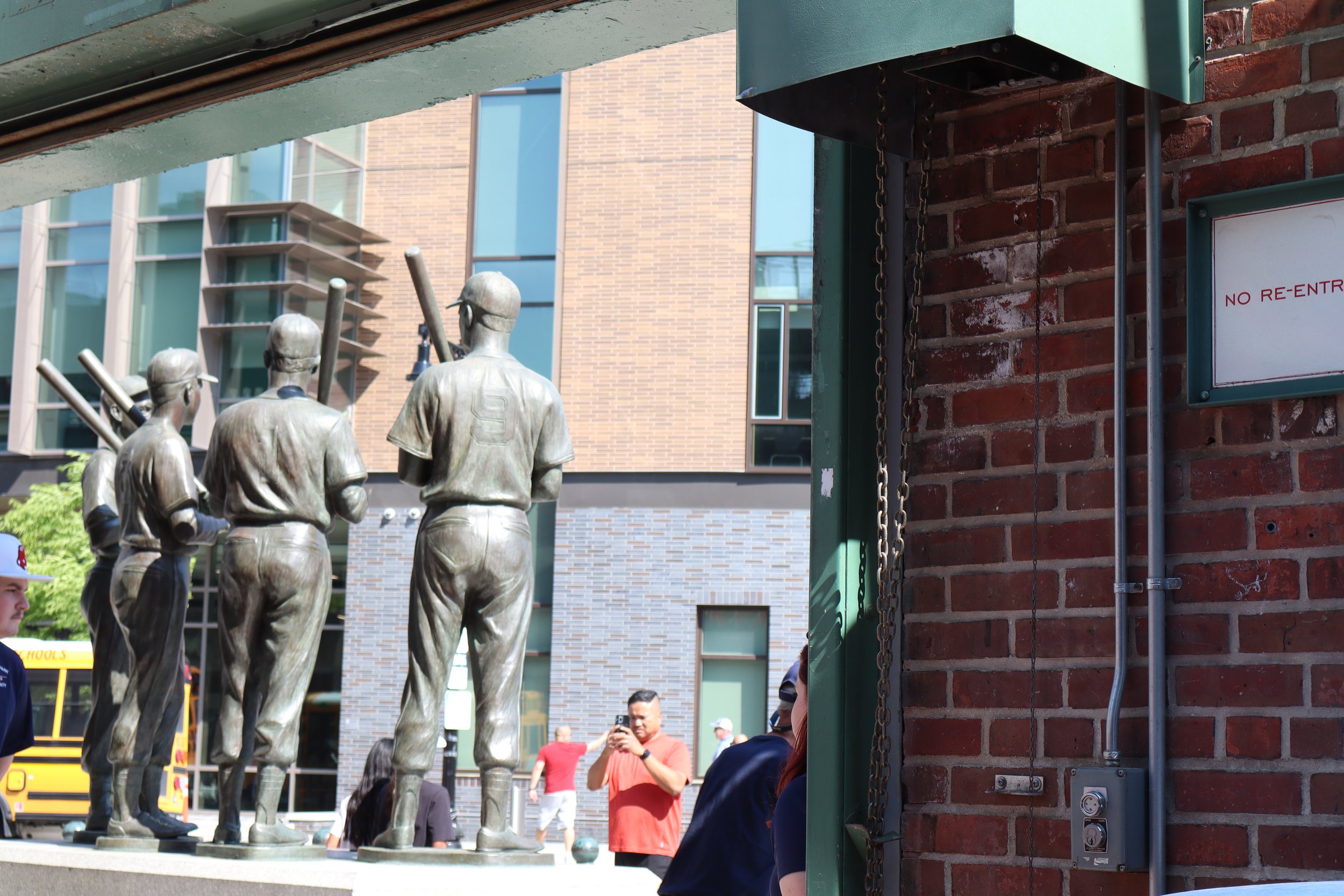
My dad is a Mets fan, and I think I have these memories of the first few Mets games he took me to. It was probably the late '80s. I just remember there being fights at every single one of them. These were angry Mets teams because they weren't quite living up to the expectations that they had, and they had some players on there who just loved to fight. I have this vivid memory. I don't know if it's true or what game it was, or who they were playing, but we were sitting in the lower level, and a fight broke out. My dad put me on his shoulders and I got to watch the whole thing. It was incredible.
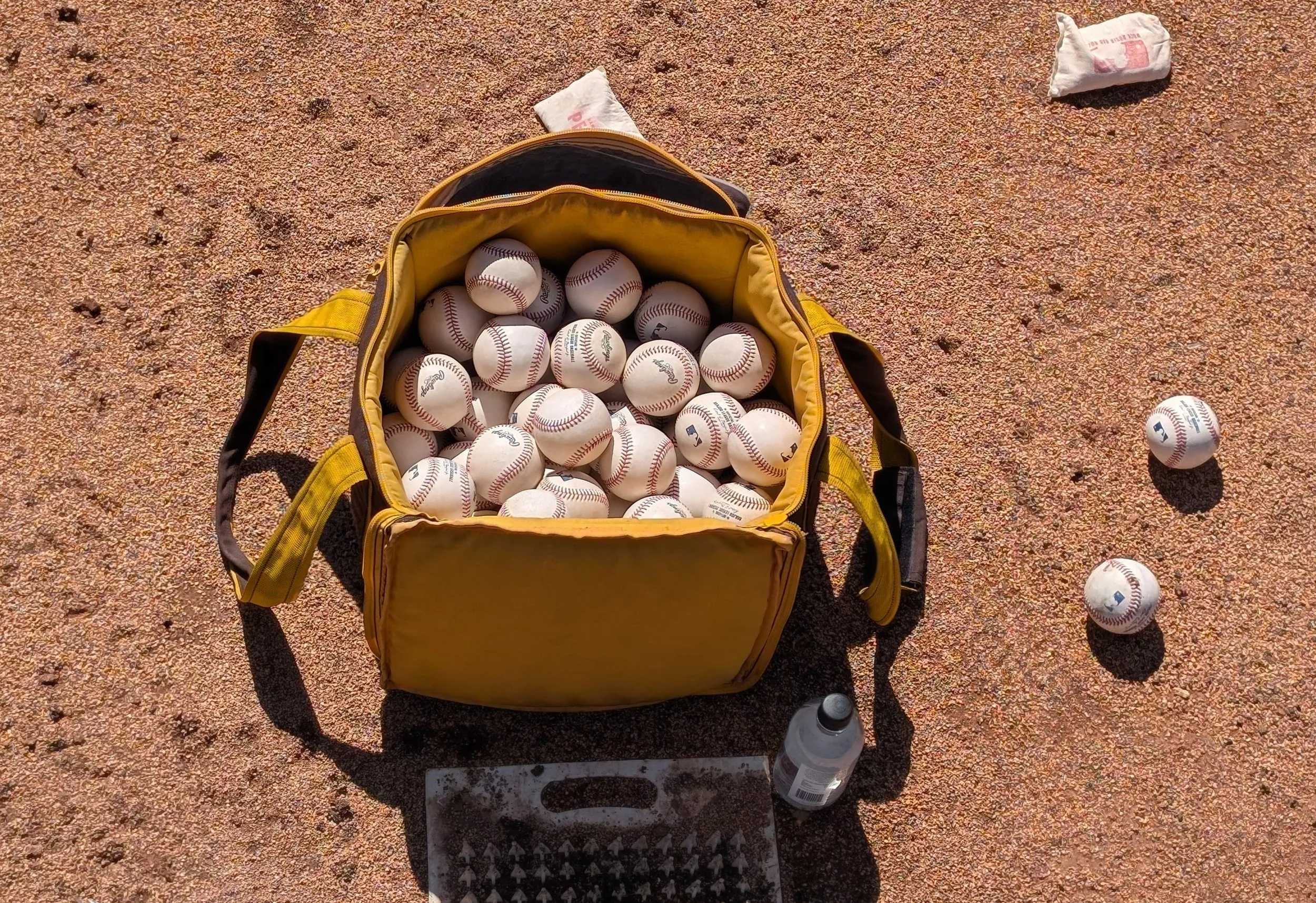
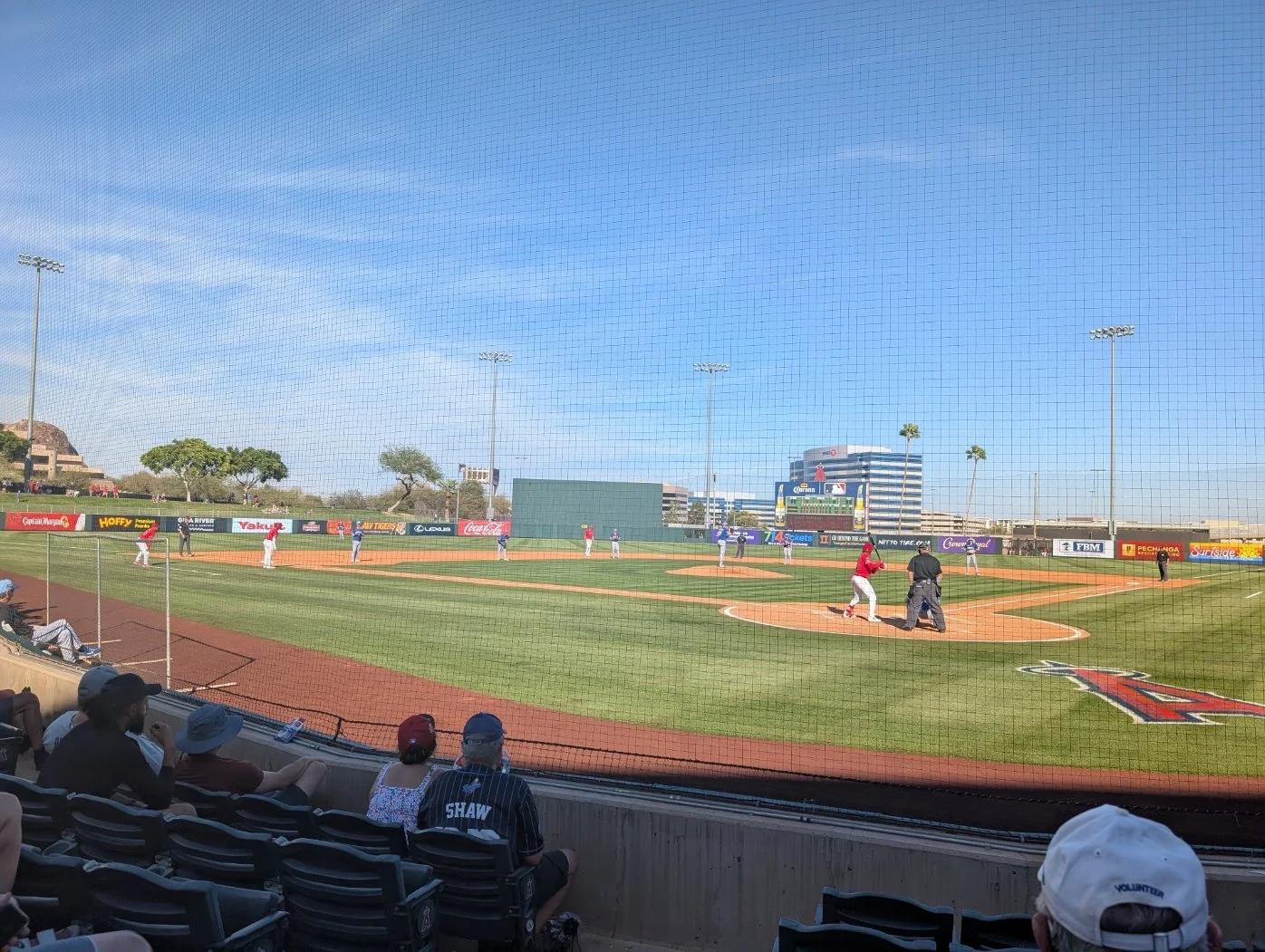
Then I just got sucked into being a Mets fan for the good and the bad. I think being a Mets fan teaches you things about life and the missed expectations or makes the triumphs feel really good. I left school, knew I wanted to be around baseball in some way, worked for two minor league teams, and tried to keep it going until I really just couldn't afford it anymore. The thing I did learn about myself in doing that, the thing I loved most about being around the team, was the fact that every night there's a game, and every night there's an event, and there's opportunity to show somebody a good time and create memories for people.
I think that really translated into the convention business for me. It still holds true. You've been in this situation too, I'm sure. You walk a show and you see somebody experiencing something that you know is really meaningful and kind of transcended to them, and all you want to do is make that experience better for them, or see what you can do to help, or how you can amplify what's going on. All of those sorts of memories that are made at shows, obviously, we're not fully responsible for all of them, but you feel like maybe they wouldn't have been able to do that or have that experience if the environment that we built wasn't created for them.
Just working for Single-A team in upstate New York as an unpaid intern, meaning the only money I made that summer, redeeming cans and bottles with the other six interns. The birthday parties that you put together, and the corporate outings that you did, and the family reunions that you were able to put together, you're a small part of that, but I think there's something about being a part of creating those environments that's really special.
What teams did you work for? Are they still around?
No, they're not. One is still around as a college summer league team, but it was a Single-A team for the Blue Jays called the Auburn Doubledays. It was the best summer of my life. Then I did two seasons with the Bridgeport Bluefish. They were an independent team in Bridgeport, Connecticut. For an independent team to last 20 years, it's a good run. I met my wife working for that team. I got to take my daughter to a game before they folded. Yes, a lot of good Bluefish memories.
Fanatics Fest is this weekend June 20-22. You can grab your tickets at www.fanaticsfest.com.