A ballplayer in King Arthur’s court
An interview with the creative team behind Comixology’s Medieval and an exclusive excerpt of the newest issue
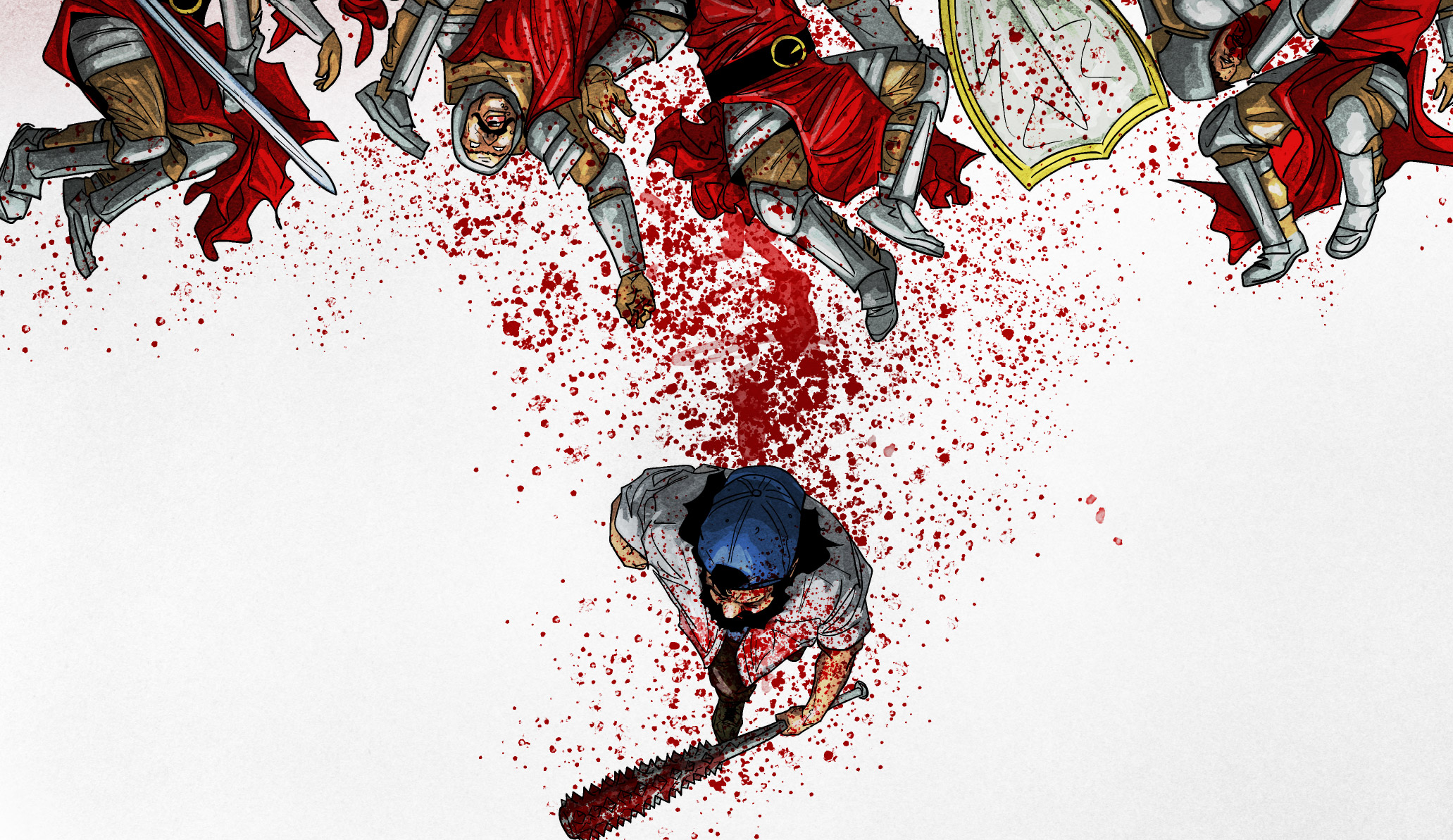
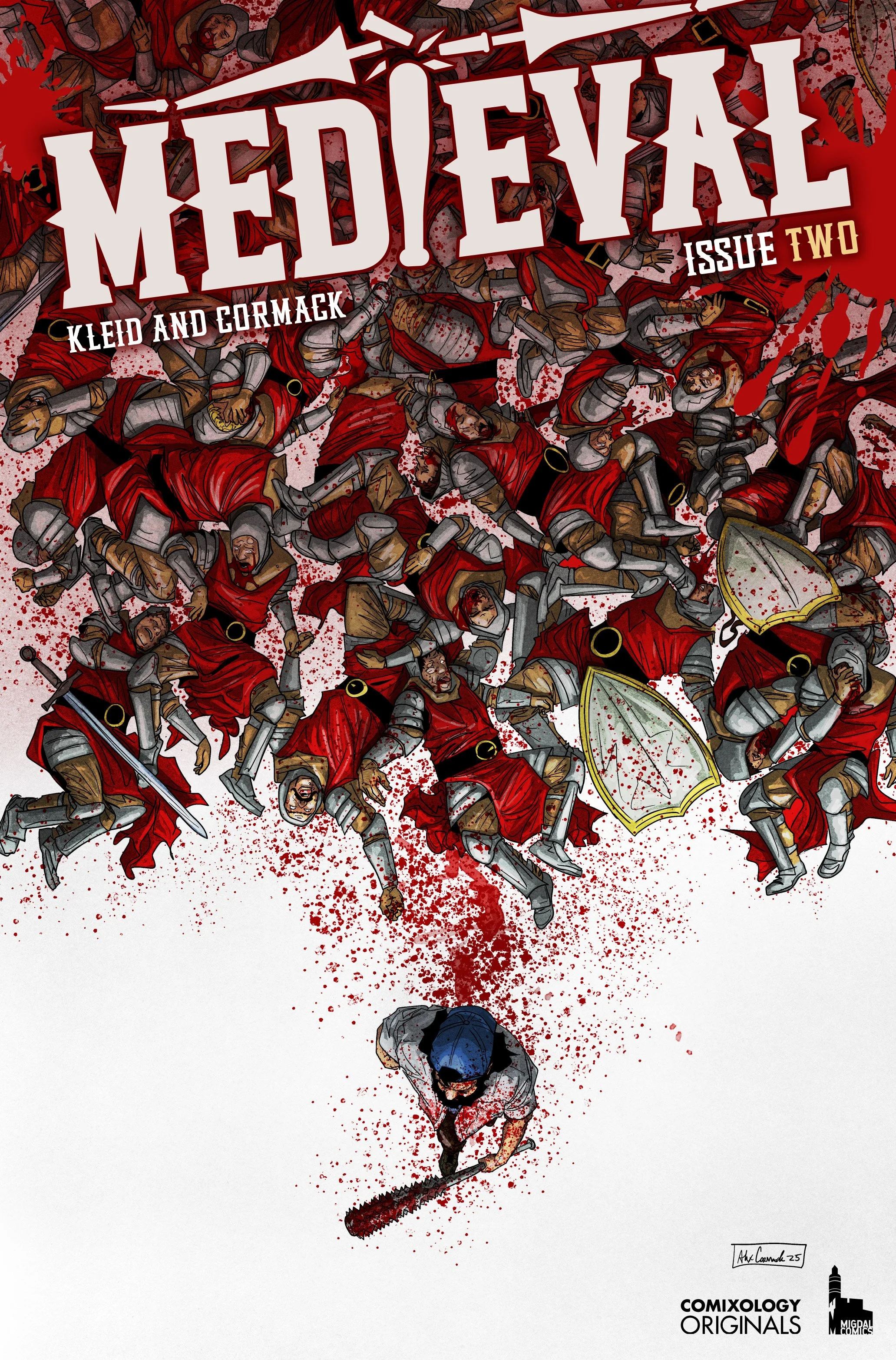
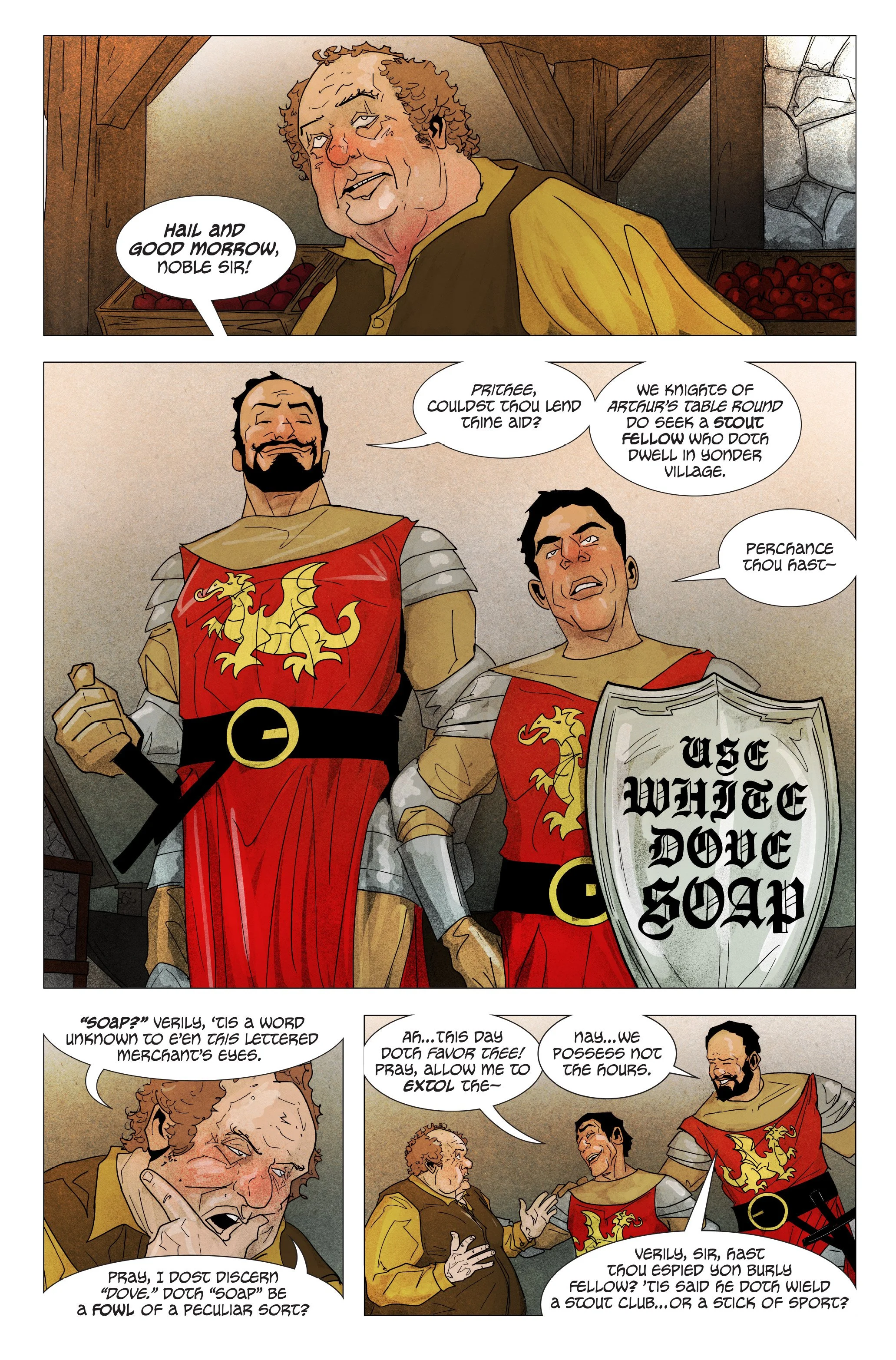
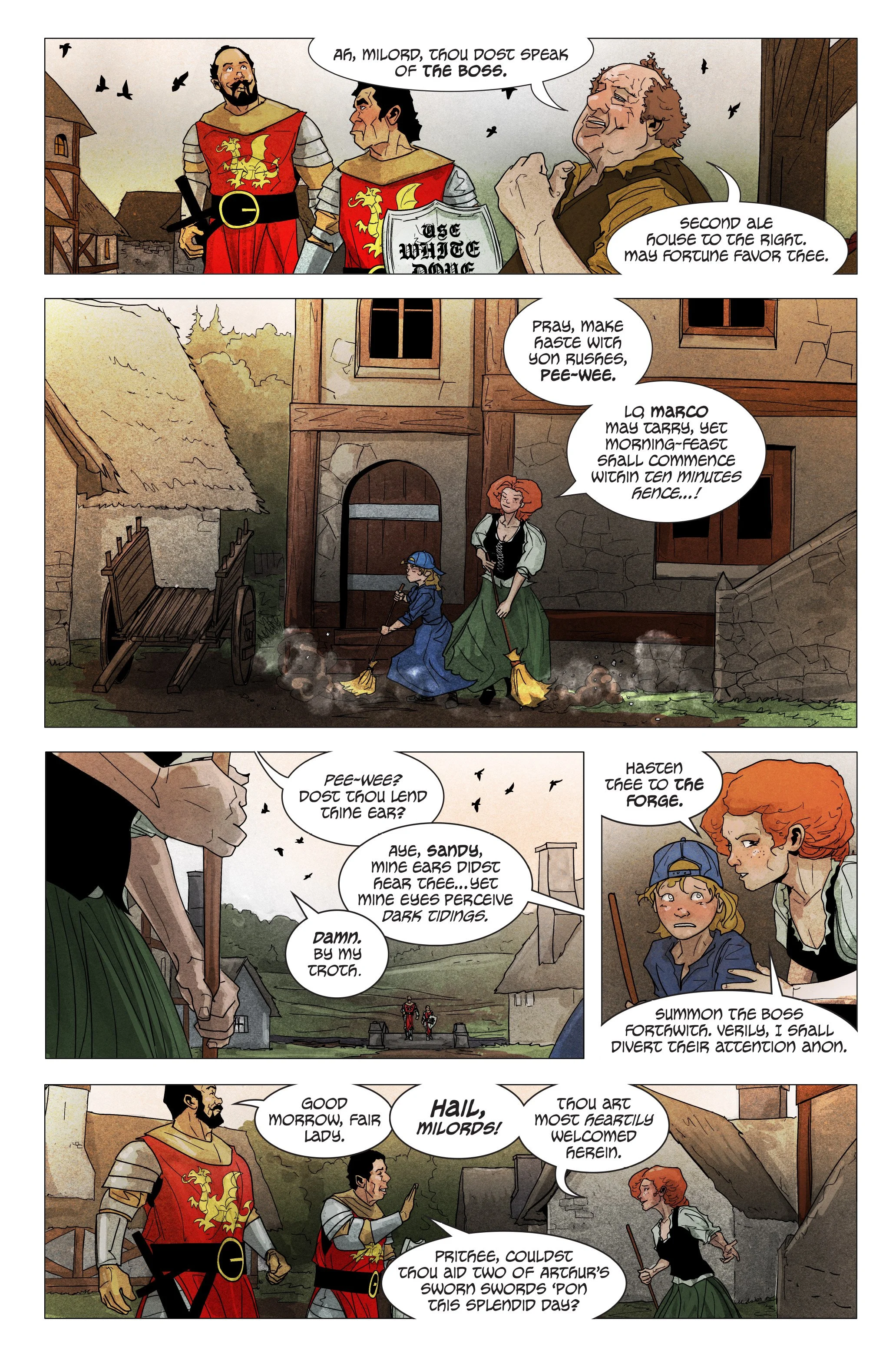
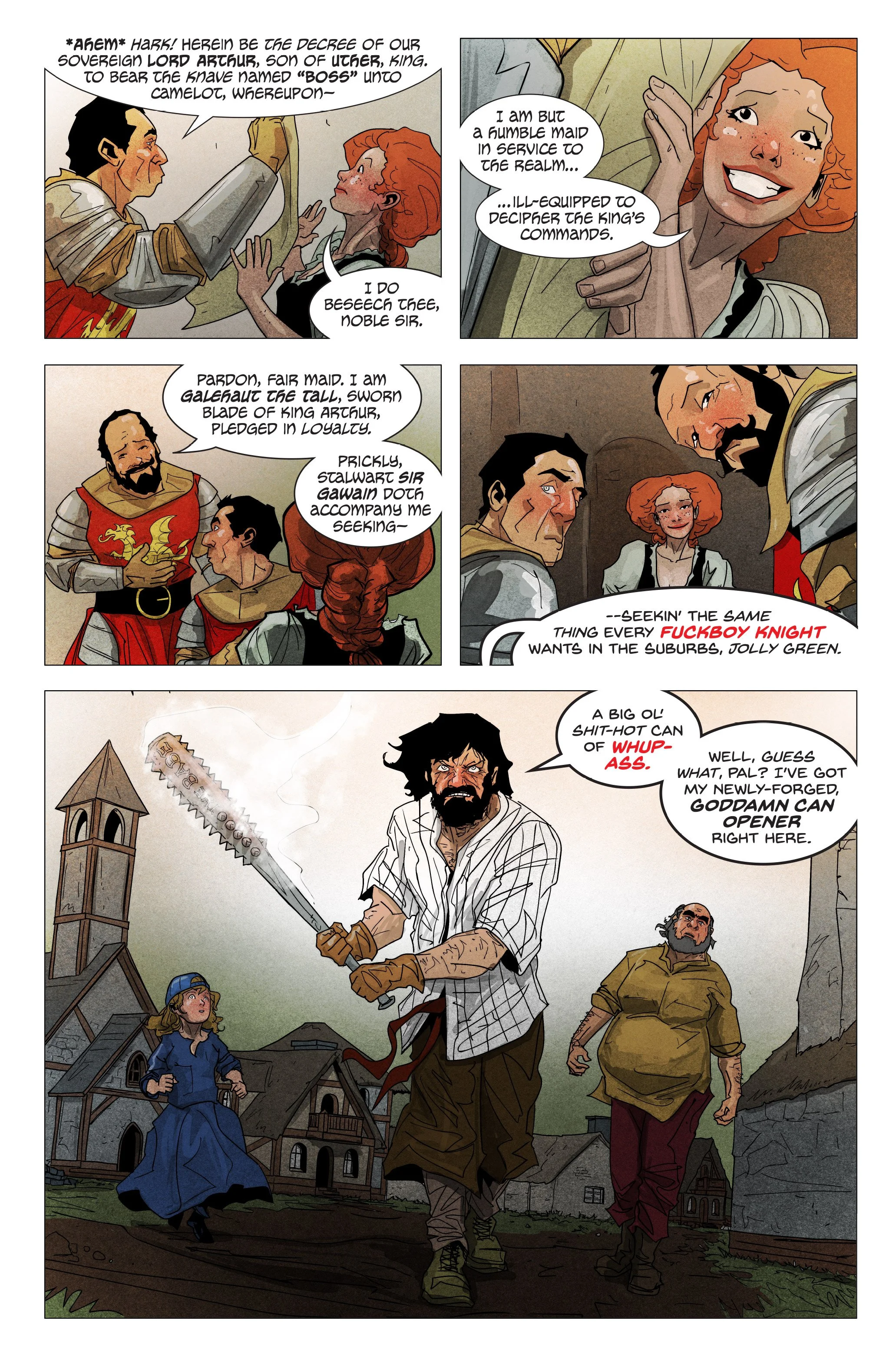
Medieval is a new comic that follows a Yankees fan who wakes up in sixth-century England with only his custom baseball bat in hand. He soon stumbles across the knights of King Arthur’s court and has to find his way home.
In the following conversation, creators Neil Kleid and Alex Cormack speak to dabbling in Arthurian legend, setting up a comics’ big twists, and their own relationship with baseball.
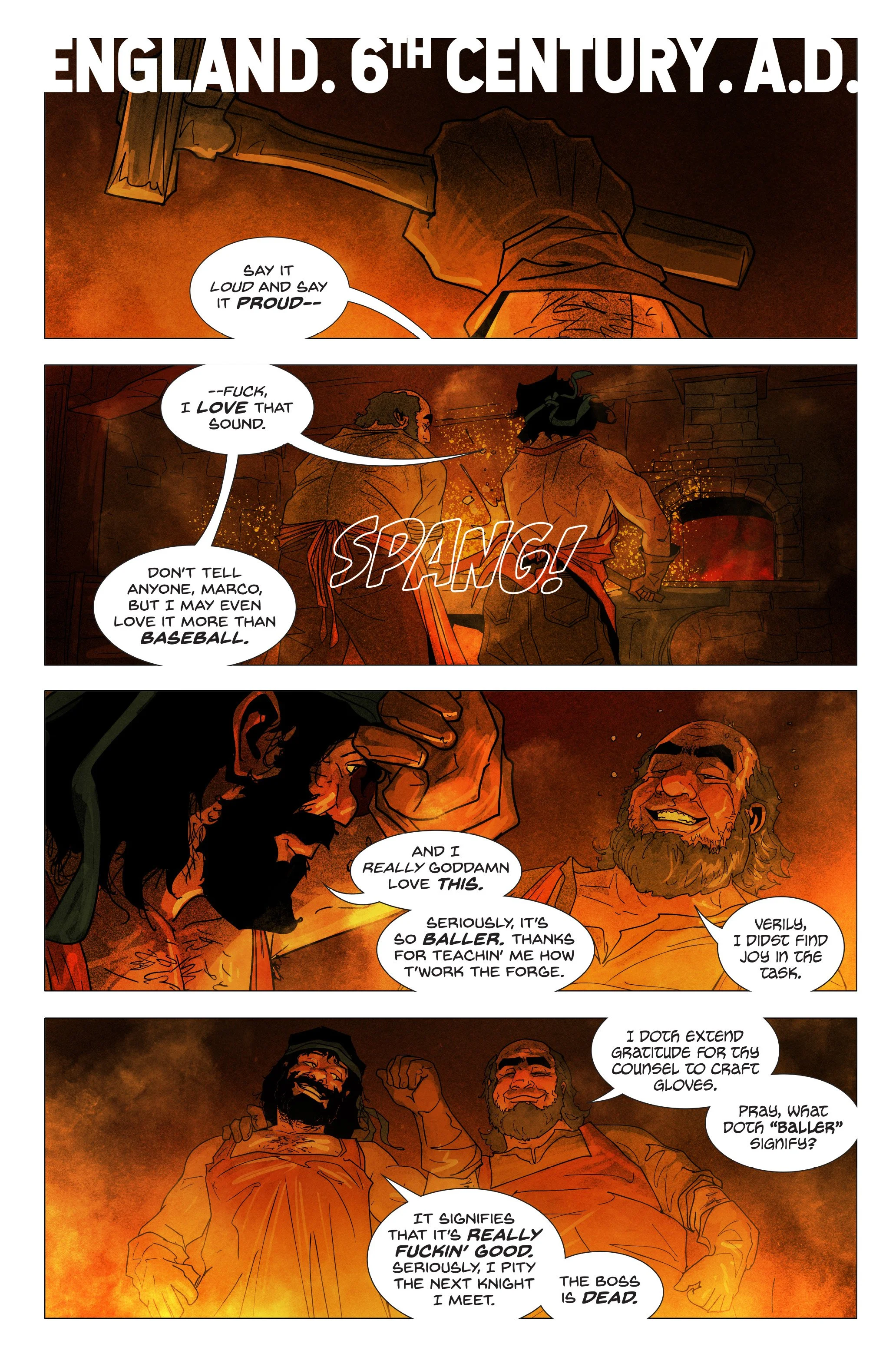
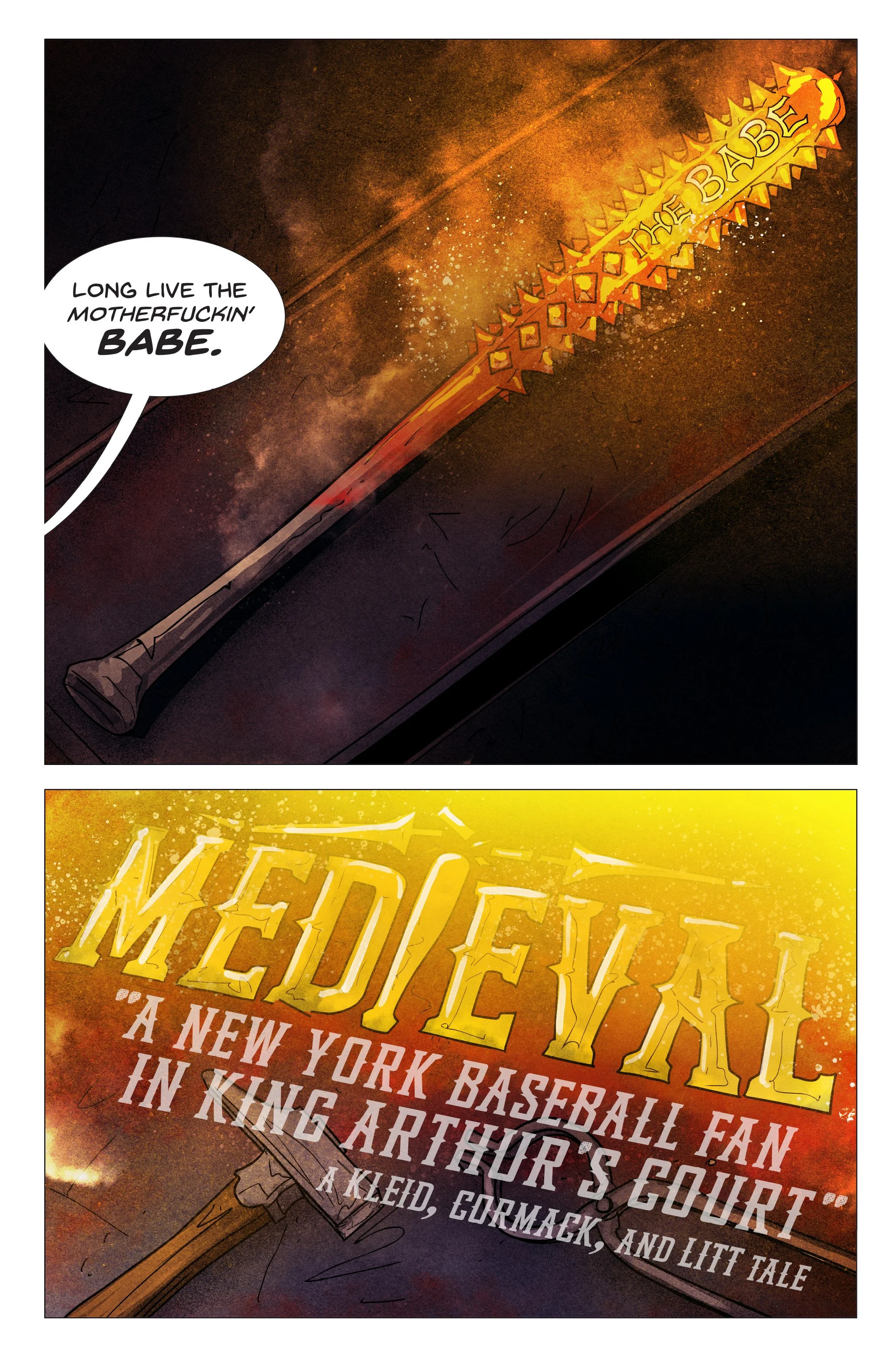
At the end of the interview is an exclusive excerpt of issue 2, which is out on Comixology today.
Where did the concept for Medieval come from?
Neil Kleid: It really has two inspirations. Medieval came from the fact that I had just done two really emotionally-heavy dramatic books at ComiXology, Panic, which was an apocalyptic thriller, and Nice Jewish Boys, which is a grounded suburban crime story. They took a lot from me, both of those.
I wanted to do something more visceral and from the gut. I told ComiXology that I want to do something that is light and I can have fun with. I thought it was going to be a superhero story. Then just tangentially, I had read Mark Twain's A Connecticut Yankee in King Arthur's Court because my kids had been watching some kid-goes-back-to-Camelot movie on Disney+.
As I was reading it and I was telling people that I was reading it, for some reason, because I'm a baseball guy, I kept saying “A New York Yankee in King Arthur's Court.” I was like, no, that's not right…
The book is about a guy named Hank Morgan who is a 19th-century Yankee from the Northeast and knows all the modern capitalist things of the 19th century. He goes back to Camelot and basically rebuilds Camelot. He makes a newspaper. He puts in toilets. He invents soap. He does everything. The guy's like a whirlwind.
I was like, if that was me, I could do some things really well. I know how to use my cell phone. I don't know how to build my cell phone. I could probably invent comic books. I could make a good pizza.
That was really what it was. What if some schmuck like me who loves sports, who loves comics, who loves pop culture got hit in the head and ended up back in 6th-century England, how would I survive?
That really was the impetus for it. I wanted to do something that was over the top and fun, but I also wanted it to be about baseball. I told ComiXology it’s going to be about rivalries and the love of the game and about the tribalism. That's what I wanted. It's also a love story. It's got emotional through lines, but it's really about blood, beer, baseball, and Britain.
What really stood out to me in the first issue was, you have these two worlds that are starkly different. As opposed to a prose book like the Twain where you're imagining these two worlds, we see them in the comic. Alex, what was it like to design the look of the two contrasting worlds?
Alex Cormack: In the script, we had a handful of main characters, including our main character, Danny. I just made up a few faces, some based off of real people, and some just made up out of the blue. Just putting them in their world and figuring out what type of costumes and clothing that everybody would wear. For the first part of that, for the first three pages, it could have been a few months ago at Yankee Stadium. It was just basically what you’re wearing to your regular game.
Going to the King Arthur era, that was really more challenging. It wasn't just blue jeans and a T-shirt. It was a lot of fun going through it because I was looking at a lot of N.C. Wyeth, especially his illustrations of King Arthur. Just really, I'm not going to say stealing, but borrowing.
Neil Kleid: It's a homage.
Alex Cormack: A homage, yes. I took a lot from him. Then I looked at Errol Flynn, Robin Hood movie. I looked at Army of Darkness, what those guys were wearing. I was looking at Monty Python, old books. I was looking at a lot of Frazetta. That was a blast for me looking at all the stuff that I would be looking at anyways, now I'm doing it for work.
Do you have favorite Arthurian stories?
Neil Kleid: It's funny because I'm familiar with the Arthurian cycle. I read, I've watched movies and television, what have you, but I wouldn't call myself an Arthurian scholar at all. One of the things I told myself with this one, and I even put it in-- I always put a note to my co-author, to my artistic co-author at the beginning of each script about like, "Here's where my head's at." I told Alex, "My motto for this book is no research." I am basically walking into this saying, "Here's what I know, and that's going to be-- and that's the title of our first issue, Enough To Be Dangerous."
I think Alex went off and did a bunch of research, but for me, I love King Arthur, Lancelot, Merlin. There were some characters that I did surface research because I'm looking for names in issue 2. Danny gets a wingman, and the wingman is one of the knights that I did surface research on. I read a little bit about him, and I'm like, "Oh, he'd be great. He'd be perfect."
I'll be honest, my influence and inspiration for the guy wasn't even what I read. It was Marvel Comics’ Hercules. I was like, "Oh, yes. That's what I want, a big, burly, fun dude." I took what I knew, and I turned a little bit of it on its ear. You have Gawain show up, and he's an asshole, as opposed to what you would find in the novels where he's very virtuous and honest.
Alex Cormack: It's funny because when my son was born, just to read something to him, I actually read King Arthur to him. Of course, I'm going to blame it on just being sleep deprived at the time, I forgot it all, but I had a good time at the time.
To be lame, Sword of the Stone?
You have a big twist at the end of issue 1, which is fun for baseball fans especially. Was that in your mind when you were structuring this book, or did that come up while you were scripting?
Neil Kleid: No, I think I knew. Every time I go into a new comic, I know the big turns. I know where I'm going to start, where I'm going to end, and the key turns for each issue. Same thing for Nice Jewish Boys, the other books that I did. I always knew SPOILER, for whoever's not going to read it, you were going to find out his best friend was an FBI agent.
There's moments where you're just like, this is the first issue, this is how I want to set it up because I want somebody to get to the end and think that, "Oh, this is what the book is." "Oh, damn, what just happened?" That is really what draws people back in.
My favorite [twist] is Marvel comics Thunderbolts. That first issue that Kurt Busiek did, where we're at the end of the first issue when you've been following these heroes all day, and then they're the Masters of Evil at the end. To me, that was one of the gold standards of that crazy surprise at the end where you're like, “I didn't think I was going to want to read this issue too, but now I'm dying to read it.” That's what I wanted to do with Medieval. What we wanted to do was really set their expectations throughout the issue, like, "Oh, it's about some dumb guy from New York who's getting drunk and fighting people and angry." Then at the end, you're like, "Oh, that's what the story's about. Okay."
What’s your personal relationship with baseball?
Neil Kleid: I'm a Tigers fan. I'm from Detroit. I grew up going to Tiger Stadium, Michigan and Trumbull, watching games. I wasn't there, but I was around when we won in '84. I was a kid back then, and the Tigers winning the World Series was a huge thing. Lou Whitaker, Alan Trammell… Lance Parrish was my favorite player.
There was a period where after '84, the team broke apart. Obviously, they got bad for a long time. I was in college and started to get into art and writing and drawing, I started to not really pay attention to [baseball] too much. I was a fan by name, but not necessarily like my brother, who's been a fan all of his life and knows all the stats, all the players. He's diehard and would actually made fun of me. He's like, "Oh, you’re fair weather.”
I would pay attention every now and then when they did get good. When Cecil Fielder came along, and then eventually when Prince Fielder came along. The thing that really got me back into it was in 2011, I started working for Topps, in their digital department, working on what are now their series of collecting apps.
The first one we did was Topps Bunt, which was like a trading card app where you got X amount of trading card players, and you could swap them with people, and you could also play them in real-time contests. If I played Derek Jeter, and he did really well that day, my points would go up. I helped really envision the look and feel and the UX of those apps. That really got me back into baseball.
It was also about that time that the Tigers started getting good again. Justin Verlander and Max Scherzer, Miguel Cabrera, that was the team that got me really back into it. We had a pretty decent year. Let's see where we go.
Alex Cormack: I'm from Massachusetts, so I grew up going to Fenway Park all the time. Everybody in my family is a huge, big Red Sox fan. I remember I saw Roger Clemens, Wade Boggs, those guys play in the '80s. I remember I saw Pedro, I saw Nomar, and David Ortiz. It was great.
The thing is, I'm a fan, but nowhere as huge a fan as the rest of my family. My brother knows the stats going back to the beginning of baseball. Especially for the Red Sox, my dad knows all the stuff. My sister, my mother, everybody's a huge fan. I'm probably the lowest, but I'm still a big fan.
When we were doing this book and it was going to be Yankees, I had to get their approval. I sat down with them. I'm like, "Listen, are you still going to talk to me? I think it's going to be a really exciting book, and I think it's going to be a lot of fun, but it is Yankees." They're like, “aw, fine. Can you talk to him about it?” I'm like, “He's pretty set.”
Neil Kleid: I’m pretty set! And I'm not even a Yankees fan!
Check out an exclusive preview of Medieval issue #2 below.