Cave of the Winds
Dave Glass
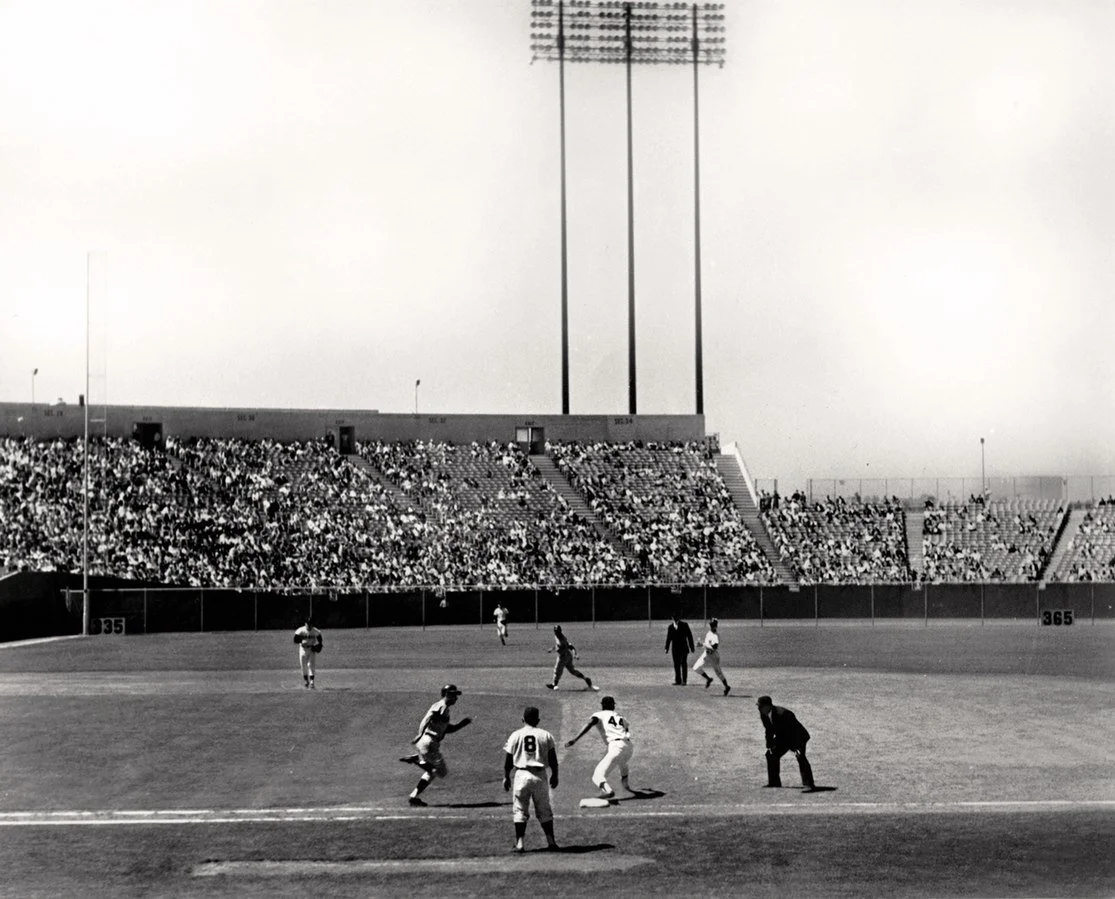
I’ve sat through a decent number of cold-ish, windy-ish baseball games (as a Southern California native, my definition of cold and windy probably differs quite a bit from those who live north or east of our more temperate climes). However, whenever I do catch a windy game, my mind always wanders to a ballpark I never got a chance (or the misfortune) to visit - Candlestick Park.
Candlestick Park was the home of the San Francisco Giants from 1960 to 1999. The stadium was named after its location, Candlestick Point, which was itself named after the long-billed curlew native to the area, nicknamed the “candlestick bird.” But for our interests, Candlestick Park was a famously miserable place to catch a game. Not only were the seats too far from the field, the winds were pretty much unbearable, leaving the players and fans in the constant cold, battered by gusts of wind blowing off the Pacific Ocean.
In response to the miserable game experience, the Giants ended up creating a promotional pin called the ‘Croix de Candlestick’ that could only be earned by fans who made it through an extra innings night game. The pin read “Veni, vidi, vixi,” or “I came, I saw, I survived.”
What draws my imagination to Candlestick Park is the fact that it was both a terrible ballpark but also the home of some of the most romantic, memorable moments of baseball history. Willie Mays hit both his record breaking 512th home run and his 3,000 career hit (at the time, he was only the 10th player to hit that milestone) at the Candlestick. Willie McCovey’s famous line drive to lose the World Series to the Yankees took place in the park in 1962.
The contrast between the romanticism of baseball’s past and what was certainly a terrible place to watch the game (Candlestick was not only nicknamed “cave of the winds” but also “ashtray by the bay” and “north pole”) is the perfect wintry mix that can be counteracted by my nostalgia goggles, as I imagine what it would be like to sit in the freezing wind and watch some of the greatest moments in baseball history.
It’s an exercise in nostalgia, sure, but it’s also a way to remember that the past came with quirks, just like our own game day experiences. Somehow, knowing that the baseball watching experience at Candlestick was awful, makes the baseball plays, as well as the fans and players, of the past feel more real, instead of something you just read about in a book.